
AI-Powered Inspection in Hazardous Areas: Using Intrinsically Safe Cameras & AI For Best Results
AI-powered defect detection in industrial inspection is moving from pilot to production. Accuracy rates above 99% for defined defect classes are now achievable, transforming how we monitor high-value assets. However, these figures are not inherent to the software alone; they depend entirely on the quality of the images the model is trained on and fed during operation.
In this blog we’ll look into what impact AI visual inspection is already having, which devices integrate AI most effectively, and how they work in your end-to-end operation.
What AI Visual Inspection Actually Does in Plant Environments Today
It’s worth being precise about what AI visual inspection is actually doing in industrial environments right now, because the gap between the pilot-phase promise and the production-scale reality is where most organisations are currently operating.
Computer vision models trained on industrial imagery can identify corrosion grades with classification accuracy that matches experienced inspectors on well-defined defect types. They can detect coating failures across large surface areas faster than manual survey, flag crack propagation patterns in weld inspections, and identify equipment anomalies, such as valve position deviations, missing components, seal extrusion, from photographic input. In applications where the defect class is well-defined and the training dataset is large and consistent, these models are fast, repeatable, and do not fatigue.
The applications already in production use in oil and gas include drone-captured corrosion mapping on storage tanks and structural steel, automated flare tip condition assessment, pipeline coating inspection on accessible above-ground sections, and heat exchanger tube sheet analysis from borescope imagery. Refining environments are using computer vision for catalyst bed inspection and reactor internal condition monitoring. Offshore operators are deploying it for riser and subsea inspection support, where the cost of manual inspection is high and the frequency required for risk-based inspection programmes is difficult to achieve.
What these applications share is a requirement for consistent, high-quality image input. The models are not general-purpose. They are trained on specific defect classes in specific visual contexts. When the input deviates from the conditions the model was trained on, including different lighting, different focal distance, lower resolution, and motion blur, detection accuracy drops.
So, AI visual inspection in oil and gas is real and already producing results, but it is not robust to poor image quality. The camera is, more than ever, an integral part of the system.
What the iPhone 17 Pro Max Brings to AI Inspection Workflows
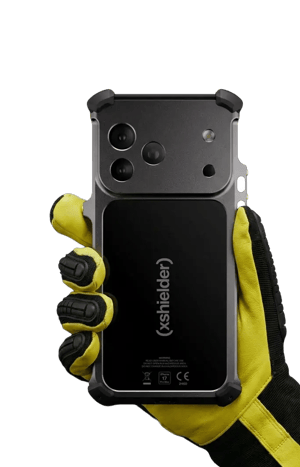
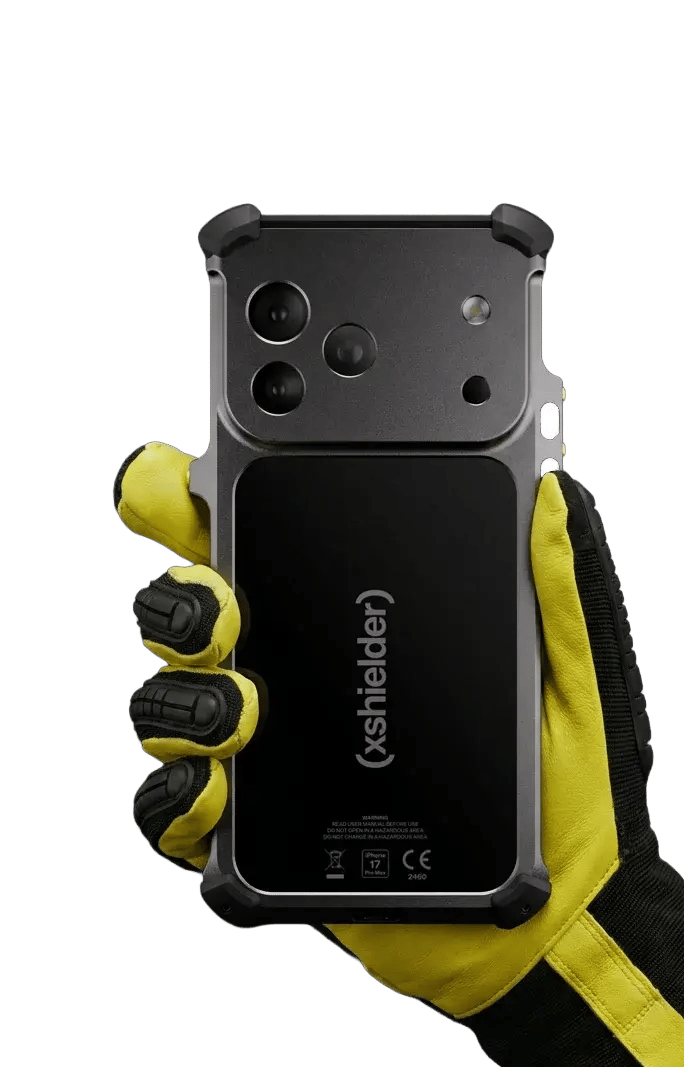
The iPhone 17 Pro Max represents a significant leap forward for field-based AI inspection. Its computational photography engine produces consistently sharp, well-exposed images even in the harsh, uneven lighting found in industrial plants. Beyond simple photography, the integrated LiDAR sensor provides precise depth data that can supplement visual classification, allowing AI models to understand the physical volume of a defect or the exact distance between components.
For more advanced workflows, the device's on-device processing, powered by Apple Intelligence, allows lightweight machine learning models to run locally, providing instant feedback to the technician. Additionally, ProRes video capability provides broadcast-quality input for video-based anomaly detection systems, which can analyze vibration patterns or fluid leaks in real time. The consistency of Apple's image processing pipeline is perhaps its greatest asset; it ensures that the AI model receives a standardized input every time, which is vital for maintaining model reliability across a global fleet of devices.
Edge AI vs. Cloud AI in Classified Areas
The image quality discussion leads directly to a connectivity question that shapes how AI inspection systems can practically be deployed in hazardous areas.
Connectivity in hazardous areas is notoriously difficult, often characterized by "dead zones" inside heavy steel structures. This creates a significant bottleneck for cloud-based inspection AI, which requires massive data uploads to function. The solution is processing at the edge - running the AI model directly on the smartphone. This eliminates latency and ensures that the inspection workflow is not tethered to a Wi-Fi or 5G signal.
While the cloud remains necessary for training complex models and aggregating fleet-wide data, the iPhone 17 Pro Max has the localized compute power to perform real-time inference. A technician can point the camera at a flange, and the device can immediately highlight potential issues using on-device AI. This "Edge AI" approach ensures that critical safety decisions are made in seconds, not minutes, providing a robust failsafe for operations in the most remote and disconnected classified zones.
Digital Twins as the Destination for Field-Captured Data
The data captured during an AI-powered inspection does not live in a vacuum; it is the lifeblood of the asset's digital twin. AI-analyzed images, LiDAR point clouds, and photogrammetric models are fed into these digital platforms to create a continuously updated "living" model of the asset’s condition. This allows operators to visualize the progression of a defect over several years, accurately predicting when a component will reach its end-of-life.
In this ecosystem, the field technician with a certified iPhone is the most important data capture point. They sit at one end of a pipeline that runs through to predictive maintenance scheduling and risk-based inspection planning. By ensuring the initial capture is of the highest possible quality, the digital twin remains an accurate reflection of reality, allowing management to allocate resources with surgical precision and satisfy the most stringent regulatory reporting requirements.
What is Coming Next
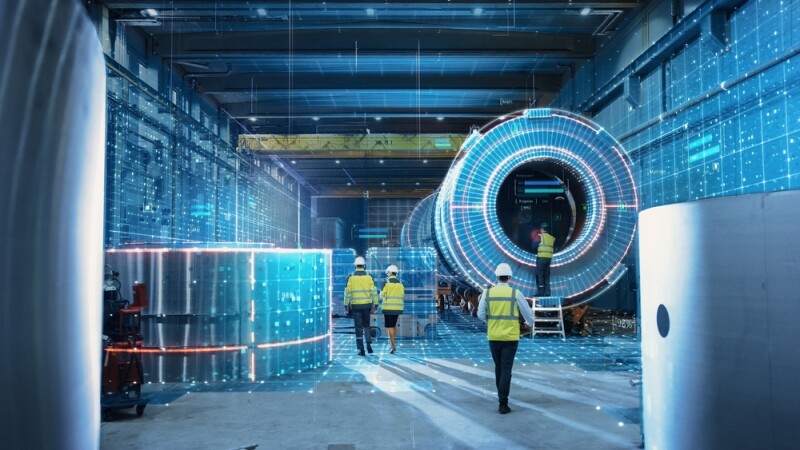
The future of industrial inspection is moving toward a highly automated, "supervised" model. We are already seeing the emergence of autonomous inspection robots that use the same vision AI models trained on mobile-captured imagery. Soon, AR will overlay real-time AI analysis directly onto a technician’s field of view, highlighting hidden risks as they walk through a facility.
The field technician's role in this environment will likely shift from inspection execution to inspection supervision. They are responsible for access, positioning, quality control of captured data, and judgment calls that the AI cannot make - not for the classification and documentation work that currently occupies most of the inspection time on site.Regardless of how these advancements pan out, the fundamentals stay the same: the quality of the output will always be determined by the quality of the input.
Frequently Asked Questions
What image resolution is needed for AI defect detection in industrial inspection?
The minimum resolution required depends on the defect class being detected and the standoff distance at which images are captured. As a general principle, defect features need to occupy enough pixels to be distinguishable from background noise and neighbouring material. For surface corrosion grading, crack detection, and coating assessment at typical inspection standoff distances, 4K resolution is the practical minimum for consistent model performance.
Can AI visual inspection replace manual inspection in oil and gas?
Current AI visual inspection technology augments manual inspection rather than replacing it. Computer vision models perform reliably on well-defined defect classes in conditions similar to their training data. They do not replace the judgement of an experienced inspector in novel situations, complex multi-failure scenarios, or defect types outside their training distribution. The industry direction is toward AI-assisted inspection where the model handles classification and documentation tasks and the inspector focuses on access, context, and decision-making.
What is edge AI and why does it matter for hazardous area inspection?
Edge AI refers to machine learning inference running on the device itself rather than in the cloud. In hazardous area inspection, where connectivity is often limited or unavailable, edge AI allows inspection models to process images and return results in the field without depending on a network connection. The iPhone 17 Pro Max runs inference on Apple's Neural Engine, which is capable of handling the classification tasks most relevant to field triage: defect present or absent, severity within normal range or flagged.