
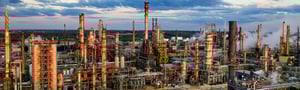
The Connected Worker & Digital Transformation in Hazardous Areas
In this guide we go into detail about how certified mobile technology is changing the way workers operate in hazardous environments. From inspection workflows and lone worker safety to asset management, cybersecurity, and industry-specific applications across oil and gas, chemical, mining, and pharmaceuticals.
The Era of the Connected Worker
Hazardous industries have always demanded a certain kind of person: experienced, careful, and able to make decisions with incomplete information. For decades, that last part - incomplete information - was just accepted as part of the job. A field technician in an oil refinery knew what was in front of them. The control room knew something different. And the two rarely spoke in real time.
That gap between the worker in the field and the data that could help them is what the Connected Worker concept addresses.
In high-stakes environments like oil and gas, chemical processing, and mining, a connected worker is someone equipped with certified mobile technology that puts operational data, communication tools, and guided workflows in their hands, on-site, in real time. Not back at the office.
However, the current information gap is still significant. Many field operations still run on paper checklists, verbal handovers, and periodic inspections. When something goes wrong, the investigation often reveals that the warning signs were there - buried in a logbook, or in someone's head. Modern industrial mobile devices don't eliminate risk, but they do make that kind of preventable failure harder to ignore.
The goal is straightforward: get the right data to the right person at the right time, using hardware that won't compromise safety in a Zone 1 or Zone 2 environment.
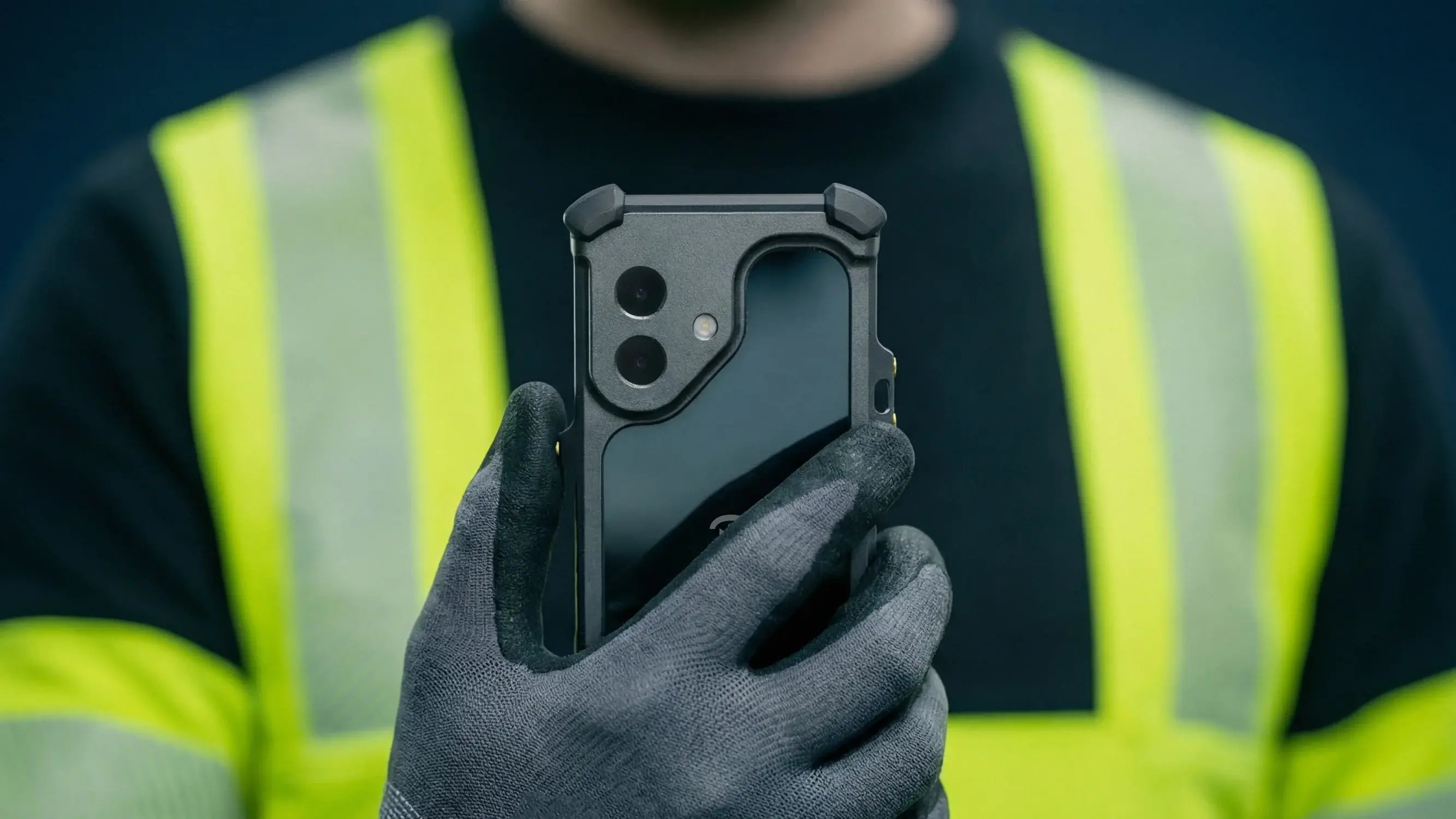
Why Mobile Technology Matters in Hazardous Areas
The case for digital transformation in hazardous environments isn't really about the technology itself. Rather, it's about what paper-based operations actually cost, in time, in errors, and occasionally in lives.
From Paper to Real-Time
A field technician completing a paper inspection form is working blind. They fill it in, carry it back, hand it over, and someone transcribes it. By the time that data is visible to anyone who can act on it, hours have passed. If something was borderline on the form, that's days before a decision gets made.
Mobile devices change that calculus entirely. An inspection completed on an intrinsically safe or explosion proof phone is logged immediately, visible to supervisors in real time, and can trigger workflows automatically if something falls outside tolerance. The efficiency gain is real, as is the safety improvement.
Situational Awareness in Hazardous Zones
A good mobile device in an explosive atmosphere does more than replace paper. It becomes a worker's connection to everything happening around them: asset data pulled via NFC or RFID, live communication with off-site engineers, permit-to-work status, and atmospheric readings if integrated with sensors. Workers stop operating on memory and gut instinct alone. They have a digital window into the site that updates as conditions change.
Workforce Retention
There's a quieter driver behind industrial digitalisation that doesn't get enough attention: the workforce itself is changing. Younger technicians entering oil and gas, chemical, and mining roles have grown up with smartphones. Handing them a paper clipboard and a radio feels like a step backwards. Companies that deploy modern, familiar tools — properly certified for the environment — retain staff more easily and see faster onboarding. That's not a soft benefit. Skilled industrial workers are hard to find.
Related reading: The ROI of the Connected Worker: Quantifying Efficiency Gains in Hazardous Environments
Inspection & Maintenance Workflows
Of all the areas where mobile technology changes day-to-day operations in hazardous sites, inspection and maintenance workflows show the fastest and most measurable improvements.
Guided Digital Checklists
Paper checklists have one fundamental flaw: they're easy to skip. A technician under time pressure can initial a box without completing the step, and nobody knows until something fails. Digital checklists on mobile devices on the other hand, can enforce sequence. For example, the next step doesn't appear until the current one is completed, and each step may require photo evidence or a sensor reading where appropriate. Compliance rates improve not because workers become more diligent, but because the tool makes cutting corners harder than doing it right.
Remote Assistance and Expert Access
One of the bigger operational challenges in hazardous industries is the skills gap. Experienced engineers are expensive, scarce, and can't be everywhere. Mobile video communication lets a field worker on a North Sea platform or a remote mining site share a live view of a problem with an expert who's onshore or in a different country entirely. The expert guides the repair in real time. No helicopter, no travel, no waiting.
For this to work, the device hardware matters. A low-quality camera in a dark, dusty, or wet environment produces footage that's useless for diagnosis. High-resolution cameras and strong processing on a modern smartphone, housed in a certified explosion-proof case, are what make remote assistance practical rather than theoretical.
Predictive Over Reactive Maintenance
Mobile data capture is changing the economics of maintenance. When every inspection is logged digitally, patterns emerge: equipment that's trending toward a failure threshold, components that fail more often in certain conditions, maintenance intervals that need adjusting. That data doesn't exist in paper records because nobody has the time to analyse them.
With mobile-captured inspection data feeding into maintenance management systems, teams can shift from fixing things after they break to catching them before they do. The cost difference is significant. The safety difference can be more significant still.
Related reading: Beyond the Checklist: How AR and Remote Support are Improving Hazardous Site Communications
Digitalisation of Hazardous Environments
Mobile devices are the front end of a much larger digital ecosystem being built across hazardous industries. Understanding what that ecosystem looks like helps to understand why device choice matters so much.
Connectivity Infrastructure
A connected worker needs a connection. In controlled environments, Wi-Fi 6 provides the bandwidth and low latency required for high-definition video and real-time data sync. On larger or more remote sites, private 5G networks are being deployed specifically for industrial operations — giving operators control over spectrum, security, and coverage without dependence on public carriers.
For the most remote operations, such as offshore platforms, Arctic sites, and open-cast mines, Low Earth Orbit (LEO) satellite connectivity from providers like Starlink is changing what's possible. Broadband-level connectivity in places that previously had none. The device in a worker's hand can now reach back to systems and people it simply couldn't before.
All of this infrastructure needs to work safely in potentially explosive atmospheres. That means every device on the network needs appropriate certification.
Digital Twins
As mobile-captured data accumulates, it feeds into increasingly sophisticated site models. Digital twins - 3D representations of physical assets updated with real-world data - allow engineers to run simulations, plan maintenance, and understand site conditions without necessarily being on site. LiDAR scanning from a handheld device can capture structural geometry with centimetre-level accuracy. That data, uploaded from the field, updates the model.
Hardware and Software, Together
There's a tendency to treat the device as a commodity and focus all attention on the software platform. That's a mistake in hazardous environments. The platform only performs as well as the hardware allows. A sluggish processor fails during a high-stress moment. A poor camera makes remote assistance impossible. A device that overheats or fails in cold weather poses significant safety risks.
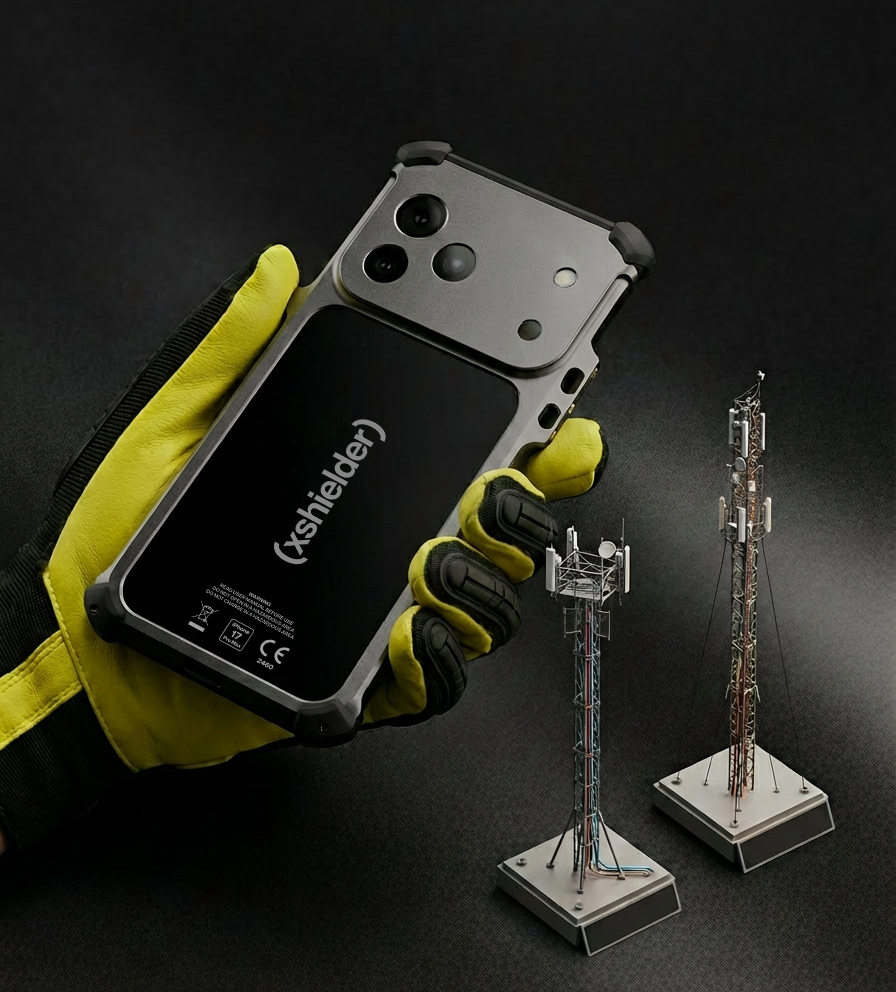
The argument for using flagship consumer hardware (like an iPhone) in a purpose-built, certified explosion-proof case, rather than a dedicated ruggedised device, comes down to this: flagship hardware is continuously updated, well-supported by enterprise software vendors, and significantly more powerful than most dedicated industrial devices. The case handles certification and physical protection. The phone handles everything else.
Lone Worker Safety & Communication
The connected worker conversation often focuses on efficiency. Safety is the more urgent argument, and nowhere more so than with lone workers.
Working alone in a hazardous area is a risk that's easy to underestimate. The danger isn't always dramatic - it can be a slip, a medical event, a sudden exposure. What makes it serious is that nobody knows. Nobody is there to respond. And in some environments, "help cannot be easily called" is a significant understatement.
Modern mobile devices with appropriate safety software address this through a combination of technologies. Man-down detection uses the device's accelerometer and gyroscope to identify if a worker has fallen and not moved - triggering an alert if there's no response to a prompt. SOS buttons provide a direct emergency call with no fumbling required. High-precision positioning, combining GPS with Wi-Fi triangulation and sometimes ultra-wideband, tells the response team exactly where someone is rather than an approximate zone.
None of this works if the device fails when it matters. Explosion proof certification ensures the device can be used safely in the environment. Battery performance, durability, and communication reliability determine whether it functions when it's needed.
Related reading: How Intrinsically Safe Phones Serve To Improve Lone Worker Safety
Asset Management & Data Capture
Assets in hazardous industries have an identity problem. There can be thousands of components, pipes, valves, and pieces of equipment across a single site, many of them visually identical. Knowing which one you're looking at, and accessing its maintenance history, specifications, and current status is harder than it sounds.
Mobile devices solve this through a combination of scanning technologies. NFC and RFID tags attached to assets give workers instant access to the right record the moment they're in range. Barcode and QR scanning works for assets where tag cost isn't justified. For structural monitoring, LiDAR scanning from a handheld device can capture dimensional data and compare it against baseline measurements - spotting corrosion, deformation, or settlement that would be invisible or subjective to the naked eye.
The data captured in the field only has value if it gets back to the right system. Integration between mobile apps and asset management platforms, CMMS systems, and digital twin models is where field capture becomes operational intelligence.
Related reading: Using Intrinsically Safe Phones for Asset Management & Data Capture
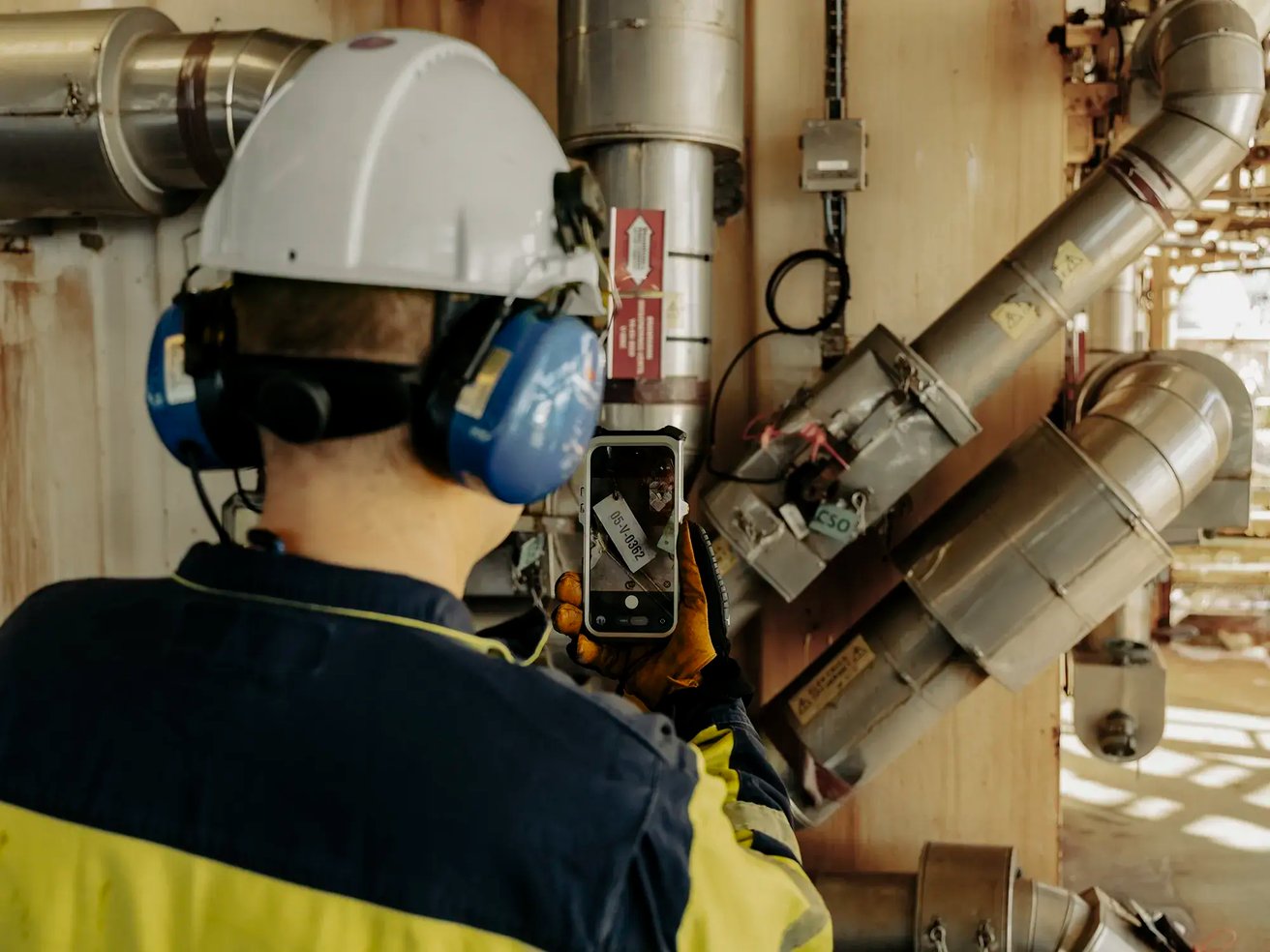
Cyber-Physical Security
Explosion proof certification means the device won't ignite a flammable atmosphere. It says nothing about what happens when someone tries to access the data on it, or compromise the network it connects to.
Industrial sites are increasingly attractive targets for cyber-attacks, both because of the operational disruption a successful attack can cause and because OT (operational technology) systems have historically been less protected than IT infrastructure. A mobile device operating at the industrial edge, connected to control systems, asset databases, and communication networks, is a potential attack vector if not properly secured.
The hardware foundation matters here. iPhones use a dedicated Secure Enclave processor that handles encryption keys and biometric data separately from the main system. This makes certain categories of attack significantly harder. But device-level security needs to sit within a broader framework: Mobile Device Management (MDM) platforms that enforce policies, manage app access, wipe devices remotely if lost, and maintain audit logs.
Physical security is also part of the picture. The Xshielder case provides the explosion-proof housing, but it also protects against physical tampering and environmental compromise of the device itself. Security at the industrial edge is physical and digital, and treating them separately creates gaps.
Related reading: When Intrinsically Safe Isn't Enough: Cybersecurity for Industrial Mobile Devices
Choosing the Right Solution
The device and certification question is where many industrial buyers spend most of their time, often because the terminology is confusing and the consequences of getting it wrong are serious.
Understanding ATEX/IECEx Zones
Hazardous area classifications define where a device can be used based on the likelihood of explosive atmosphere being present:
Zone 0 — explosive atmosphere present continuously or for long periods. Very rare in practice.
Zone 1 — explosive atmosphere likely during normal operation. Common in active process areas.
Zone 2 — explosive atmosphere unlikely during normal operation but may occur. Buffer zones around Zone 1 areas.
Equivalent dust zone classifications (20, 21, 22) apply where combustible dust rather than gas is the hazard. Mining environments often involve both. Understanding which zone a device will operate in determines the minimum certification required.
Intrinsically Safe vs. Explosion Proof
These terms are often used interchangeably. They're not the same thing.
Intrinsically safe devices limit the electrical energy available within the device to levels that cannot ignite a flammable atmosphere, regardless of fault conditions. They're designed from the ground up for hazardous areas.
Explosion proof (or "flameproof" — Ex d) devices contain any ignition within a robust enclosure. If an internal spark or arc occurs, the enclosure is designed to prevent that ignition from reaching the surrounding atmosphere.
For mobile devices specifically, the practical question is whether you need a purpose-built intrinsically safe handset or a high-performance consumer device in a certified explosion-proof case. The case approach - using a current iPhone in an Xshielder enclosure - offers access to current hardware performance, regular software updates, and full iOS enterprise support, while meeting the certification requirements for Zone 1 and Zone 2 gas environments (ATEX/IECEx Group II).
Check out our dedicated blog on Intrinsically Safe vs Explosion Proof Phones for more information
The Longevity Argument
Purpose-built industrial devices have a ceiling. They run on hardware designed years ago and often run operating systems that can't be updated beyond a certain point. Enterprise app support drops off. Security patches stop arriving. The device is physically durable but operationally obsolete.
Consumer flagship hardware on a different cycle: new models annually, iOS updates supported for five or more years, a full ecosystem of enterprise software and MDM tools. An Xshielder case provides the certification and physical protection. The iPhone inside it stays current. That's the practical argument for the case approach over a dedicated industrial device.
Industry Use-Cases - Oil & Gas
Oil and gas operations present some of the most demanding requirements for mobile technology: highly flammable atmospheres, remote locations, extreme temperatures, and chemicals like hydrogen sulphide (H2S) that are aggressive to both people and hardware.
Private 5G is being deployed on larger sites to replace legacy communication infrastructure and provide the bandwidth needed for real-time video, IoT sensor integration, and remote operations. On offshore platforms, LEO satellite connectivity is bridging the gap where traditional options are inadequate.
Material compatibility is a real consideration. H2S and other process chemicals can degrade materials that seem robust. Cases need to be built and tested for chemical resistance, not just rated for it.
Related reading: Mobile Solutions for the Oil & Gas Industry

Industry Use-Cases - Chemical Processing
Chemical plants operate with complex permit-to-work (PTW) systems designed to control who does what, where, and when. Managing these on paper is slow and creates risk — permits can be incomplete, misread, or out of date. Mobile devices with integrated PTW workflows mean a worker can confirm their permit status, access risk assessments, and log completion in real time, with a clear audit trail.
Zone 1 and Zone 2 requirements in chemical plants often extend further than people expect. The physical layout of processing areas means certified devices may be needed across a larger footprint than a quick site assessment suggests.
Corrosion resistance matters here. Many cleaning agents and process chemicals used in industrial settings will attack standard materials. Device housing — both the case and any exposed seals — needs to be specified with the chemical environment in mind.
Related reading: Intrinsically Safe Phones in the Chemical Industry
Industry Use-Cases - Mining
Mining environments are demanding in a distinct set of ways. The combination of methane (firedamp) and coal dust creates explosive risk that requires M1 and M2 rated equipment in underground coal mines — classifications that sit within the broader ATEX/IECEx framework but with specific additional requirements.
LiDAR scanning has strong applications here. Geological mapping, tunnel profiling, and structural monitoring of rock faces and support systems can all be conducted using a handheld device with centimetre accuracy. That data, captured in the field and uploaded to planning systems, reduces the need for survey teams to repeatedly re-enter high-risk areas.
Connectivity underground is a persistent challenge. Private mesh networks, distributed antenna systems, and leaky feeder cables are all used to maintain coverage. Whatever the infrastructure, the device needs to connect reliably in conditions that are often dark, wet, and dusty.
Related reading: Intrinsically Safe & Explosion Proof Phones in the Mining Industry
Industry Use-Cases - Pharmaceuticals
Pharmaceutical manufacturing sits at an unusual intersection: strict cleanliness requirements, explosive atmosphere certification in solvent handling areas, and regulatory compliance demands that are among the most detailed of any industry.
Cleanroom compatibility requires IP69K rated devices — capable of withstanding high-pressure, high-temperature washdown. Vapourised hydrogen peroxide (VHP) and isopropyl alcohol (IPA) are both used for decontamination and are aggressive to materials. Device certification needs to cover chemical resistance to these agents specifically, not just generic splash protection.
Electronic Batch Records (EBR) are replacing paper batch documentation in pharmaceutical manufacturing, driven partly by regulatory pressure and partly by the audit and traceability advantages. A mobile device that can capture inspection data, signatures, and photographic evidence in real time — in a GMP-compliant workflow — compresses validation timelines and reduces the documentation errors that cause batch failures and regulatory findings.
Related reading: Key Workflows for Pharmaceutical Manufacturing
Next steps
Field operations in hazardous environments are still catching up to what modern mobile technology can deliver. Meanwhile, the gap between paper-based processes and real-time digital workflows is widening, and those who are adopting new tech are seeing measurable differences, in cost, time, errors, and safety. Xshielder explosion-proof cases bridge that gap practically: putting current iPhone hardware, with all the software support and processing power that comes with it, into environments where uncertified devices simply cannot go. The result is a connected worker who has the tools they need, certified for Zone 1 and Zone 2, without compromise on performance.
To learn more about Xshielder's range of Explosion Proof iPhone cases, check out our product page, or get in touch with us.
Frequently Asked Questions
What is a connected worker in the context of hazardous industries?
A connected worker is a field technician or operator equipped with certified mobile technology that provides real-time access to operational data, communication tools, and digital workflows while working in a hazardous area. The device must be certified for use in potentially explosive atmospheres — either intrinsically safe or explosion-proof — to be used safely in Zone 1 or Zone 2 environments.
What ATEX zones require certified mobile devices?
Zone 1 and Zone 2 gas environments both require equipment certified to appropriate Ex standards. Zone 1 (where explosive atmosphere is likely during normal operation) demands stricter category equipment than Zone 2 (where it's unlikely but possible). Equipment certified for Zone 1 use can also be used in Zone 2. Equivalent requirements exist for dust hazard environments (Zones 21 and 22).
Can an iPhone be used in a hazardous area?
An uncertified iPhone cannot be used in Zone 1 or Zone 2 environments. However, an iPhone housed in a certified explosion-proof case — like those manufactured by Xshielder — meets ATEX/IECEx requirements for use in those zones. This approach combines current iPhone hardware and software with certified physical protection.
How do mobile devices improve lone worker safety?
Mobile devices with dedicated safety software can provide man-down detection (using accelerometer data to identify a fall with no subsequent movement), SOS alerting, high-precision location reporting, and regular check-in prompts. These capabilities are only effective if the device remains operational in the environment — which makes appropriate explosion-proof certification and hardware durability essential, not optional.