
Intrinsically Safe & Explosion Proof Phones in the Mining Industry: Requirements & Best Workflows
Mobile technology has become one of the most consequential tools in modern mining. The right certified device, paired with the right workflows, is now capable of transforming how field teams operate, communicate, and stay safe in even the most hazardous mining environments.
In this blog we discuss the safety requirements for choosing mobile devices in mining, and the real-world workflows where they're making the biggest impact in 2026 and beyond.
The Safety Requirements Mining Operations Demand from a Phone
Before we look at what mobile devices can do in the field, we need to establish what they must be. In environments where methane, coal dust, or other combustible materials are present, an uncertified device is a potential ignition source. Therefore, mobile devices must follow strict criteria, outlined below.
ATEX, IECEx, and MSHA: What Applies Where
Mining environments fall under a specific regulatory framework that differs from surface industries like oil and gas. Under the ATEX directive, mining equipment is classified under Group I, which covers underground mines and surface installations endangered by firedamp or combustible dust. This is separate from the Zone classifications used in oil and gas.
Within Group I, devices are rated either M1 or M2. M1 equipment must remain safely operational even when an explosive atmosphere is continuously present, requiring two independent layers of protection. M2 equipment is designed to be de-energised when an explosive atmosphere forms, but must maintain a high level of protection under normal operation. The correct category depends on the specific area of the mine.
Outside Europe, IECEx provides the global equivalent, and in the United States, the Mine Safety and Health Administration (MSHA) operates its own permissibility framework under 30 CFR Part 23. Crucially, MSHA doesn't simply recognise international certifications — it evaluates the entire system: the device, battery, cables, and any connected hardware together. For underground coal mines, devices must also sustain at least 12 hours of total operation, covering a standard shift plus a four-hour emergency buffer for rescue operations.
Any phone or case intended for use underground needs to be matched to the correct certification for that specific environment. A device that's compliant in a Zone 2 surface facility may not be appropriate underground.
Physical Durability in Mining Environments
Certification gets a device into the environment. Durability keeps it working once it's there.
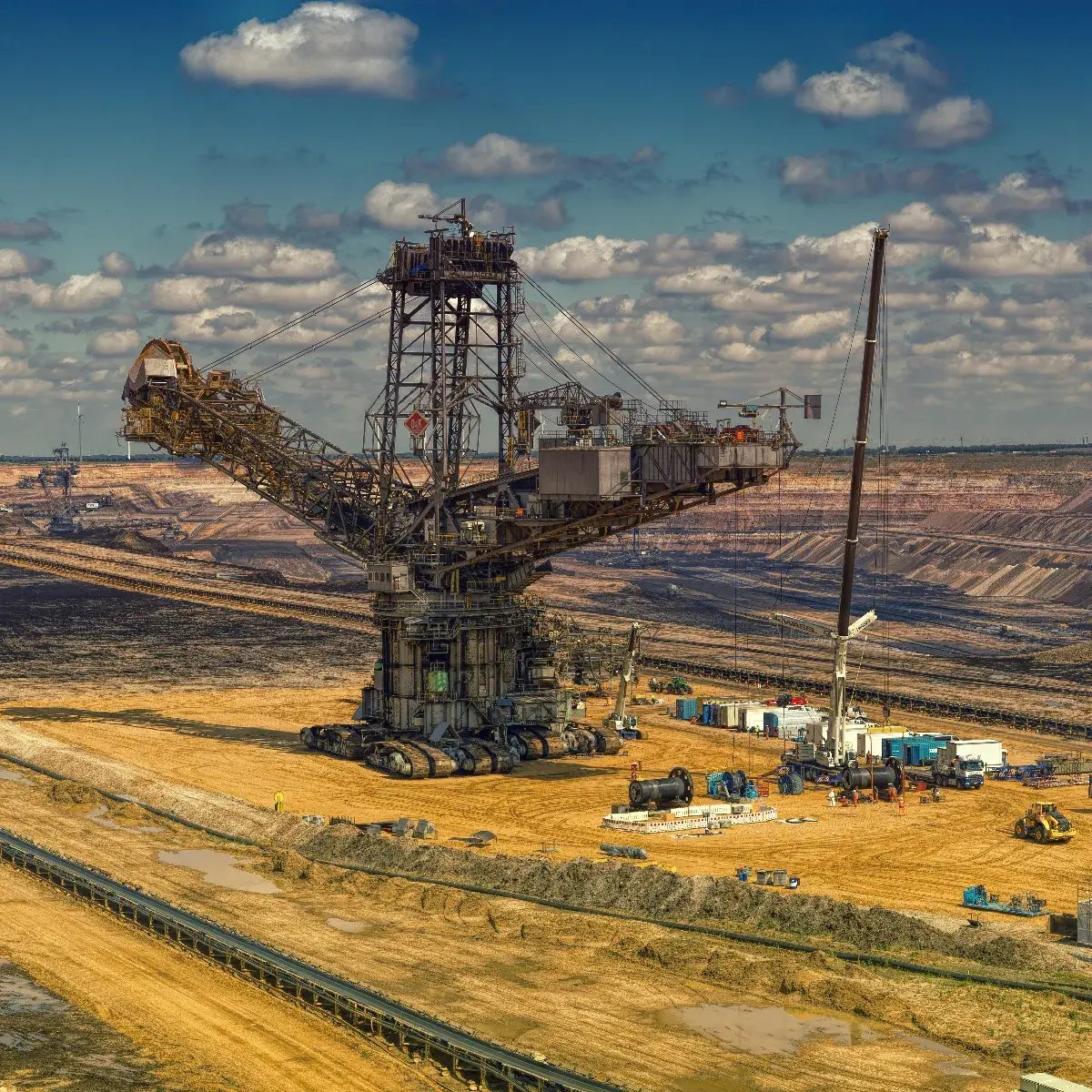
Mining presents some of the most destructive conditions for electronics on the planet. Crystalline silica dust is a constant presence in both underground and open-pit operations, acting as an abrasive that clogs ports and degrades components. Geothermal heat in deep mines can exceed 40°C, causing thermal throttling and accelerated battery degradation in devices not engineered for it. Mechanical vibration from drills, crushers, and loaders fatigues internal solder joints over time.
IP68 is the baseline ingress protection standard for mining use — fully dust-tight and capable of surviving water immersion. Beyond that, cases should meet MIL-STD-810H for shock and drop resistance, ideally rated for drops from up to three metres onto uneven rock surfaces. Enclosure materials matter too: aerospace-grade metals help manage heat dissipation, while reinforced corner protection and specialist glass protection absorb the kind of impact that occurs on a daily basis in field operations.
Workflows That Mobile Devices Enable in the Field
With the compliance baseline established, the more compelling question is what certified mobile devices are now enabling on site.
Geohazard Identification and Structural Monitoring
Roof falls are among the most serious risks in underground mining, and one of the hardest to predict through manual inspection. Mobile devices are changing that. Applications using convolutional neural networks and computer vision — such as HUMApp (Hazard Recognition in Underground Mines Application) — allow workers to photograph mine ceilings and receive automated structural risk assessments with detection accuracy rates around 90%. What might be invisible to a fatigued worker under poor lighting is identified by the system.
The LiDAR sensors now built into flagship phones add another dimension. They can generate 3D point clouds of tunnel structures and compare them over time to detect millimetre-scale shifts in rock mass. That's early warning capability that previously required specialist survey equipment and a site visit from a geotechnical engineer.
The practical outcome is that workers spend less time in high-risk areas, and the assessments they do make are objective and repeatable rather than dependent on individual experience or fatigue levels.
Geological Sampling and Borehole Logging
Paper-based geological logging has long been one of the most error-prone stages of the exploration process. Data recorded at the drill rig is transcribed in the office, often hours later, with all the accuracy loss that introduces. Digital logging tools like TabLogs and StraboField remove that step entirely.
Geologists capture rock classifications, groundwater strikes, and structural orientations directly at the drill rig in standardised formats — AGS or DIGGS — ready for immediate integration into geological models. For exploration teams in remote areas where network coverage is unreliable, offline-first functionality ensures data is stored securely on the device and synced when connectivity is available. AI-enhanced target prioritisation applied to that real-time data has been associated with discovery success rate improvements of up to 50%.
The implication is faster, more accurate resource estimation, and the ability to update exploration targets in the field rather than waiting for office-based processing cycles.
Operator Rounds and Digital Inspections
A significant portion of mining equipment sits outside the range of continuous monitoring systems. Remote pumps, compressors, and valves are checked manually, with readings recorded on paper and entered into maintenance systems later. The gap between observation and record is where errors accumulate.
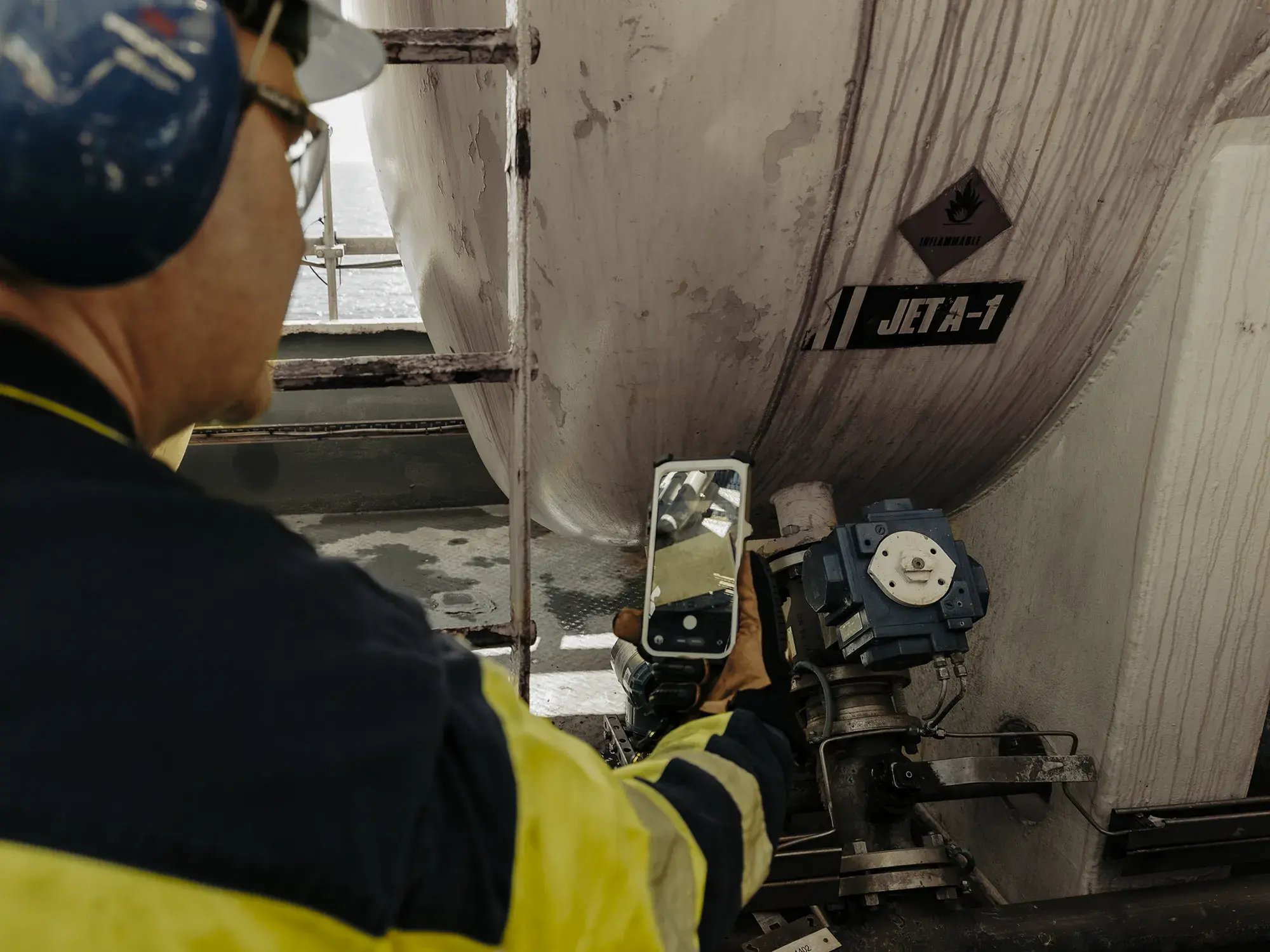
With a certified smartphone, that process becomes immediate and traceable. A technician scans an NFC tag or barcode on the asset, confirming physical presence with an automatic timestamp. A dynamic checklist loads on screen. If they report a fault or leak, the app requires photographic evidence and generates a maintenance notification in real time. No batching, no transcription error, no gap in the record.
External sensors pair directly with the device via Bluetooth or USB-C, extending what a single phone can capture to include thermal imaging and vibration analysis — equipment that previously required separate specialist hardware and a separate site visit.
To see how mobile devices support digital inspections and field records, read our guide to asset management and data capture with intrinsically safe phones.
Ventilation Surveys and Energy Optimisation
Mine ventilation is one of the largest energy costs in underground operations, and it has historically been managed with significant lag. Technicians take manual airflow readings, record them in spreadsheets, and any adjustments to fan speeds follow later.
Mobile workflows integrated with Ventilation on Demand (VOD) systems close that gap. Workers record air velocities and gas concentrations at monitoring stations underground, feeding that data directly into AI-driven ventilation management systems. By adjusting fan speeds based on the real-time location of personnel and equipment, mines using this approach have achieved energy savings of up to 30%. At industrial scale, that translates into millions of dollars annually.
Digital Permit-to-Work
Paper permits are one of the most persistent failure points in industrial safety, and mining is no exception. A permit issued at the start of a shift can't reflect the conditions 90 minutes in, and it has no mechanism to respond to a changing hazard picture.
A mobile-enabled permit-to-work system does. When a worker initiates a permit from their device at the work location, the system can pull live data: active permits in the vicinity, known hazards for the specific equipment ID, current environmental readings. Conflicts are flagged automatically before approval is given. Supervisors can approve remotely with photographic evidence of site isolation.
During the work, the permit stays live. If a gas detector trips, the system can revoke the permit instantly and push an evacuation alert to the worker's device. At close-out, photographic evidence of the restored site is required before the permit can be closed, creating a timestamped, audit-ready record. It stops being a piece of paper and starts being an enforced protocol.
Remote Expert Support and AR
When something goes wrong with complex equipment underground, the traditional response involves either waiting for a specialist to travel to site or attempting a voice-guided troubleshoot over a phone call. Neither is ideal.
Connected worker platforms change that. A technician can share a live camera feed from an explosion proof phone with an engineer anywhere in the world. That engineer can annotate directly onto the technician's screen — arrows pointing to the correct valve, labels on specific fittings, step-by-step markings that guide a repair in real time. The technician's cognitive load drops, and error rates drop with it.
These platforms are built to maintain usable video quality at the low bitrates typical of underground connectivity. The network conditions that would degrade a standard video call are within the operating range of purpose-built connected worker software.
Future Trends: What's Coming for Mobile in Mining
The workflows above represent the current state. The direction of travel suggests the role of mobile devices in mining will continue to expand significantly.
Private 5G networks are being deployed across mining operations, and their impact will be substantial. With latency targets below 10 milliseconds and 99.9999% reliability, 5G enables tele-remote control of underground machinery at surface level — removing operators from the most hazardous areas of the mine while maintaining full productivity. Network slicing allows operators to prioritise safety-critical traffic over general data, so emergency mustering alerts always get through regardless of network load.
Biometric monitoring is moving from pilot to standard. Wearable sensors feeding data into mobile supervisor dashboards can detect early signs of heat stress, fatigue, or physiological distress in real time, allowing intervention before a medical emergency occurs. In deep mines where temperatures push beyond human tolerance, this isn't a nice-to-have.
Collision avoidance systems integrated with mobile devices using V2X (Vehicle-to-Everything) technology are beginning to address one of mining's most persistent causes of fatality — incidents involving mobile equipment. When a vehicle operator's dashboard detects a worker entering a risk zone, the system can automatically slow or stop the machine. Computer vision on cabin-mounted cameras monitors operators for fatigue signs, triggering alerts before attention lapses become accidents.
AI-driven geohazard detection will become more sophisticated and more integrated with site-wide risk management systems, moving from reactive identification to predictive modelling of structural risk based on continuous sensor feeds.
The common thread across all of this is that the mobile device remains the primary interface — the point at which the worker connects to the broader digital infrastructure of the mine.
What Kind of Phone Works Best in a Certified Case for Mining
The certification on the case matters enormously. So does the hardware inside it.
Many dedicated industrial "intrinsically safe" phones are powered by mid-range processors and legacy operating systems that struggle with the demands of modern applications, such as 3D modelling, AI-assisted geohazard detection, live video, and LiDAR scanning. The computational ceiling of the device limits what's actually possible in the field.
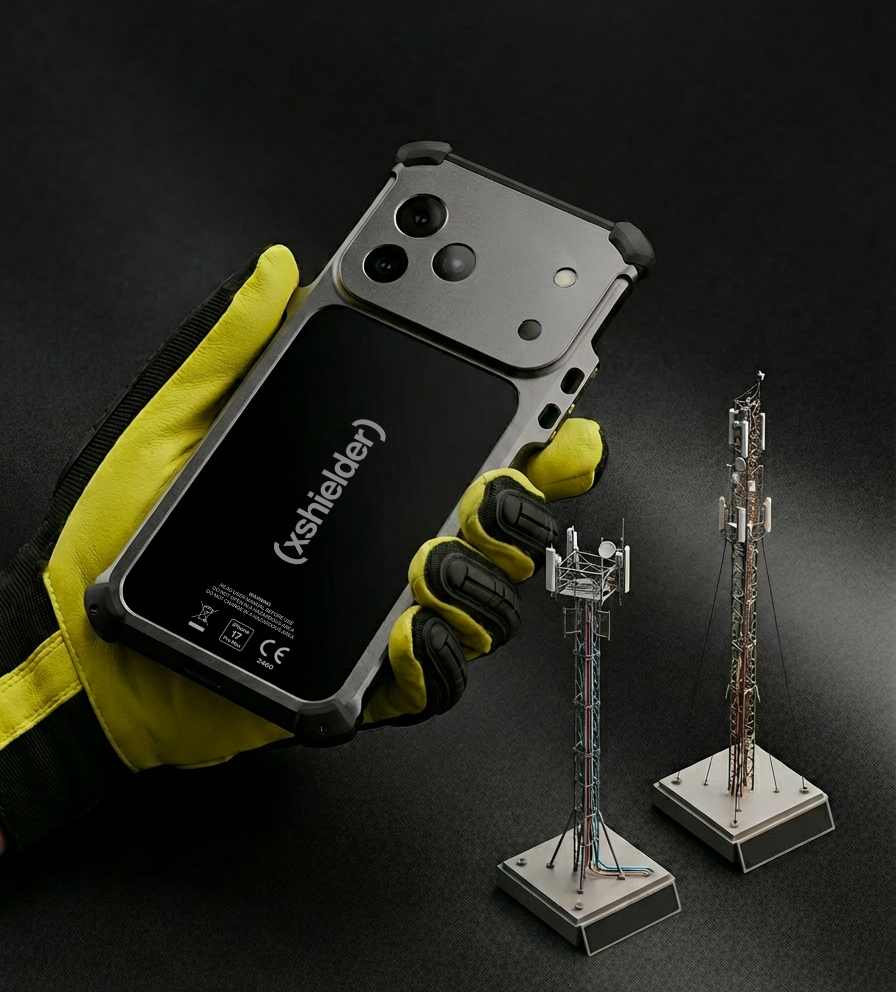
This has driven a more practical approach: take flagship consumer hardware and protect it in an ATEX or IECEx-certified explosion proof case. The iPhone 16 Pro Max and iPhone 17 Pro Max, paired with Xshielder's explosion proof cases, represent the strongest argument for this approach in mining environments.
The camera systems are among the best available, which directly affects the quality of remote video feeds, AR annotations, and photographic documentation. The Apple A18 and A19 Pro chips handle demanding applications without lag. The LiDAR scanner supports geological mapping and geohazard workflows that mid-range devices simply can't run. The large, high-brightness OLED display is practical for reviewing complex schematics while wearing gloves in low-light conditions. And the familiarity of iOS across a workforce that largely already uses iPhones significantly reduces the training overhead that typically slows digital transformation programmes.
There's a commercial argument too. Apple provides software and security updates for up to six years, meaning the device continues to be a secure, supported asset for the duration of the mine's digital programme. Meanwhile, iPhones retain significantly more residual value than most alternatives, so when the time comes to upgrade, the phone can be removed from its Xshielder case, traded in, and replaced.
If you require specific mining certificates for the device reach out to the Xshielder team!
PS: For the wider operating model behind these gains, read our pillar page on The Connected Worker.