
Why an Intrinsically Safe Camera is Key for Hazardous Site Inspections
In 2026 an inspection report is only as useful as the images that live inside it. A blurred, underexposed shot of a corroded flange tells you very little. A sharp, well-lit 48MP close-up tells a maintenance planner exactly what they're dealing with, without a return visit.
In this blog we’re going to cover why camera quality is essential for hazardous area inspections, the features that are expected in 2026, and the specific camera that you might want to consider.
The documentation gap in hazardous area maintenance
To understand why high-quality photos are non-negotiable, we have to look at how information usually gets lost between the field and the office. Written descriptions are subjective; one person’s "minor surface rust" is another person’s "structural integrity risk." This creates a documentation gap that can lead to expensive mistakes or safety oversights.
Visual evidence has become the standard for defensible audit trails because it removes the guesswork. Regulators and safety auditors no longer want to just take your word for it - they want to see the evidence.
- Objective Evidence: A photo doesn't have an opinion. It shows the exact state of a bolt or a seal at a specific moment in time, providing a factual baseline for future comparisons.
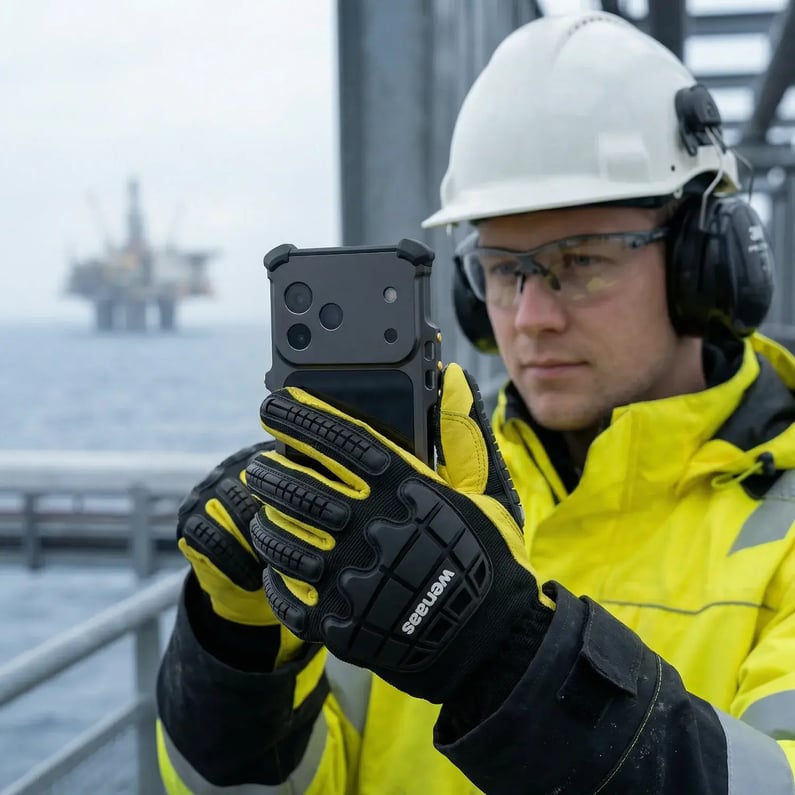
- Reduced Ambiguity: When a maintenance planner in an office miles away looks at a high quality image, they see the same reality the technician saw in the rain on a North Sea platform.
- Audit Readiness: During a safety audit, being able to pull up high-resolution, time-stamped images of every critical asset proves a level of diligence that a handwritten logbook simply cannot match.
What features are required for a useful inspection photo
When the goal is to make an engineering decision based on a photo, that photo needs to capture specifics down to the last minute detail. This requires a hardware suite that can overcome high-contrast lighting, tight physical tolerances, and the lack of a stable tripod.
- High Resolution and Large Sensors: A 48MP sensor provides the spatial resolution necessary to zoom into a 12MP crop without losing the definition of a hairline crack. Larger sensors also improve the signal-to-noise ratio, ensuring that "noise" or graininess doesn't obscure the actual texture of the metal.
- Macro Capability with Short Focal Distance: You need a lens system that can focus within centimeters. This allows for the inspection of thread integrity on a bolt or the identification of microscopic pitting on a gasket seat that standard lenses would simply blur.
- Low-Light Sensitivity and Computational Photography: Hazardous areas like storage tanks or pump rooms often have "hot spots" of bright light and deep shadows. Features like Night Mode and Smart HDR use multiple exposures to ensure the dark corners are visible without blowing out the highlights.
- Optical Zoom vs. Digital Zoom: Digital zoom and Optical Zoom are two very different things. Digital Zoom is just software interpolation - it guesses the missing pixels. Optical zoom on the other hand uses physical lens movement to bring distant objects, like overhead cable trays or high-pressure gauges, closer without losing any data integrity.
- Optical Image Stabilization (OIS): When working on a vibrating offshore platform or holding a device with one hand while wearing thick PPE, OIS is essential. It uses a floating lens or sensor-shift technology to counteract hand tremors, preventing motion blur in the final shot.
- LiDAR Depth Mapping: Light Detection and Ranging (LiDAR) allows the camera to "see" the 3D geometry of the scene. This is used for instant autofocus in pitch-black environments and enables technicians to take accurate measurements directly from the photo.
What's the best intrinsically safe camera for hazardous inspections?
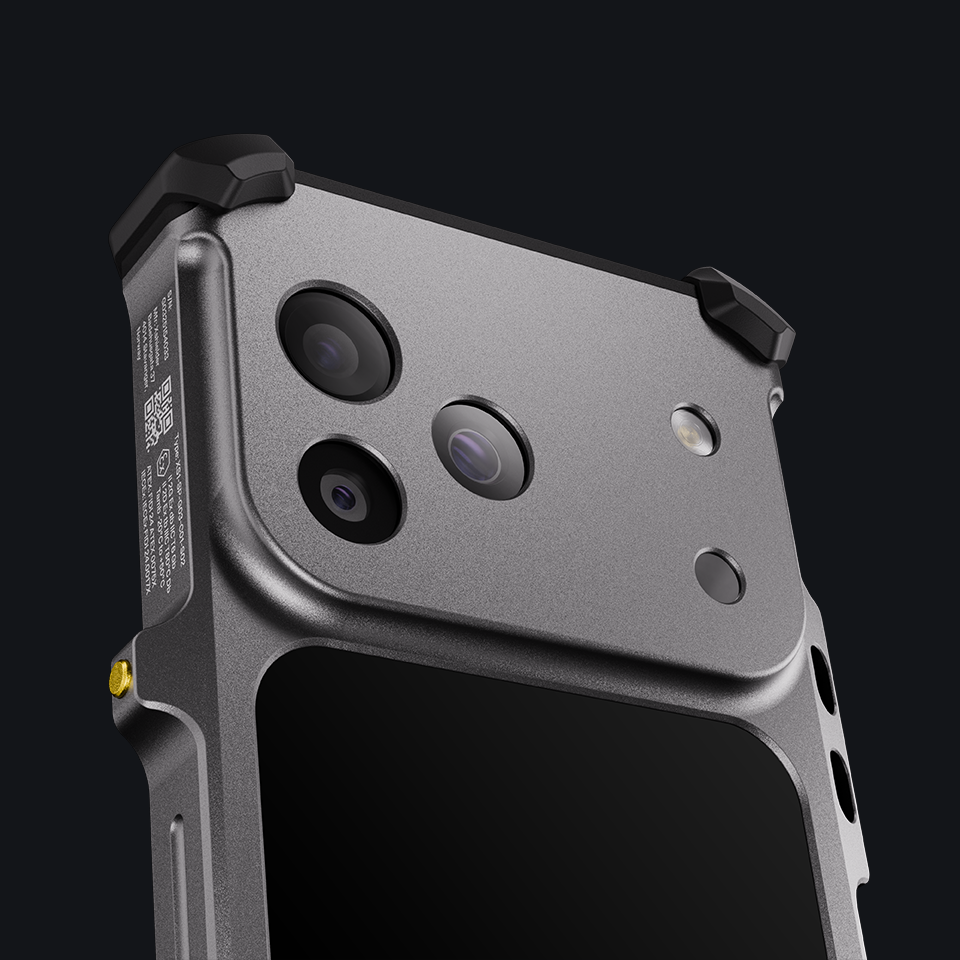
When choosing a device for Zone 1 environments, the term "intrinsically safe" often brings to mind bulky, specialized cameras with outdated software. However, an iPhone 17 Pro Max housed within an Xshielder explosion proof case is currently the most capable camera available for hazardous area documentation. This setup doesn't just rival other intrinsically safe phones, it even surpasses dedicated IS cameras that cost thousands more.
The iPhone 17 Pro Max provides a technical feature set that dedicated industrial devices simply cannot match.
Unmatched Clarity
While most dedicated Ex cameras peak at 12MP or 16MP, the iPhone’s 48MP Pro Fusion system captures four times the detail. This means that even after cropping a photo to look at a specific serial number, the text remains perfectly legible.
Adaptive Optical Zoom:
With the new 4x and 8x optical zoom levels, technicians can stay a safe distance from high-pressure equipment while still getting "optical-quality" close-ups. Dedicated cameras often rely on fixed lenses that force the user into awkward or unsafe positions.
Macro and LiDAR for Precision:
The iPhone's macro mode and LiDAR scanner work together to map 3D spaces and focus on microscopic details instantly. This is a massive leap over the slow, manual focus systems found in older industrial cameras.
Vibration Resistance:
The 3D sensor-shift optical image stabilization handles the heavy vibrations of a refinery or offshore deck, ensuring videos and photos stay sharp even when the technician is on the move.
Contextual Audio:
High-quality documentation isn't just visual. The iPhone's four studio-quality microphones and Spatial Audio recording capture the specific acoustic signatures of machinery—like the high-pitched whistle of a pressure leak—providing a complete sensory record of the inspection.
For a higher-stakes example of why image quality matters, read our guide to incident investigation photography in hazardous areas.
Why the device in the case changes the outcome
For a long time, safety managers felt they had to choose between a device that was safe and a device that was actually good. Dedicated explosion proof cameras often feel like technology from fifteen years ago - slow, clunky, and low-resolution.
By using a high-end smartphone inside a certified enclosure, you stop compromising. You get the world’s best camera technology wrapped in a shell that meets strict ATEX and Zone 1 requirements.
Integrating images into asset management workflows
The final piece of the puzzle is what happens after the shutter clicks, because a great photo is useless if it sits in a local gallery for three weeks. The added power of using a modern, connected device is the ability to bridge the gap between the hazardous area and your management software.
- Instant Sync: Instead of carrying a camera back to the office and hunting for a USB cable, the images can sync directly to the cloud or your CMMS (Computerized Maintenance Management System) via Wi-Fi or 5G.
- Automatic Tagging: The phone automatically attaches GPS coordinates and timestamps to the file. This means the system knows exactly which pump you were looking at without you having to type in a long asset ID.
- Direct Integration: Apps for SAP or Maximo run natively on the device, allowing the technician to attach the 48MP photo to a work order while they are still standing in front of the equipment.
This workflow ensures that the high-quality data you just captured actually gets used to keep the plant running safely. This ease of connection is a key difference when compared to dedicated cameras.
FAQs
Can I use a standard iPhone for inspection photography in an oil and gas facility? No. A standard iPhone is not protected against the risk of causing an explosion in volatile atmospheres. To use an iPhone for inspection photography in these areas, it must be housed in a certified explosion proof case that prevents any internal sparks or heat from igniting the surrounding environment.
How does an explosion proof case affect the image quality of the iPhone? Quality cases are designed with precision-engineered lens ports that use high-clarity materials. This ensures that the 48MP resolution, LiDAR focus, and flash functionality remain completely unobstructed, giving you the full performance of the iPhone while maintaining safety compliance.
Does the case interfere with LiDAR measurements or autofocus? No. High-end explosion proof cases are tested to ensure that the LiDAR sensors can still accurately map the environment and that the autofocus can lock onto subjects instantly, even in the low-light conditions typical of industrial inspections.
PS: For the wider context, read our complete guide to intrinsically safe cameras in hazardous areas.