Visco / Xshielder
45% Faster Inspections for Leading Global Energy Operator


The Problem
A world leading energy company spent time, resources, and capital building a digital picture of their operations. They incorporated 3D models, digital twins, live sensors, state-of-the-art maintenance systems, and more to understand and enhance what they do.
Yet, the moment a technician entered a hazardous area, the digital workflow stopped.
The reason?
All of that technology lived on office computers, far from the action, and the field teams didn't have a device in their pockets capable of reaching it.
The result?
Teams fell back on the same paper-driven workflows they had used for decades. That meant:
- Paper-based work: Printed P&IDs, drawings, and work orders carried into the field.
- Duplicated workflows: Notes and photos captured on the job, re-entered manually hours later.
- Wasted trips: Collect data in the field, return to check drawings and 3D models in the office, then go back out again.
- Information blind spots: The live digital truth onshore was inaccessible offshore, meaning field teams often worked from outdated versions of reality.
For all the investment in digitalization, the bottleneck came down to one thing: what was in a technician's pocket.
Running complex 3D models demands serious processing and graphics performance, more than any Android device could deliver. The iPhone 16 Pro Max was the only mobile device capable of running a detailed 3D model of a large industrial asset. The catch? Until recently, no certified solution existed to bring it safely into a Zone 1 hazardous area.
That was about to change, and when it did the results spoke for themselves.
.webp?width=300&name=UsingPhone%20(2).webp)
The Solution

Delivering this vision required two things working together: software capable of visualizing complex industrial data in an intuitive way, and hardware capable of running that software safely at the point of work. Neither would have been enough alone.
1. Visco vCOG MetaTwin
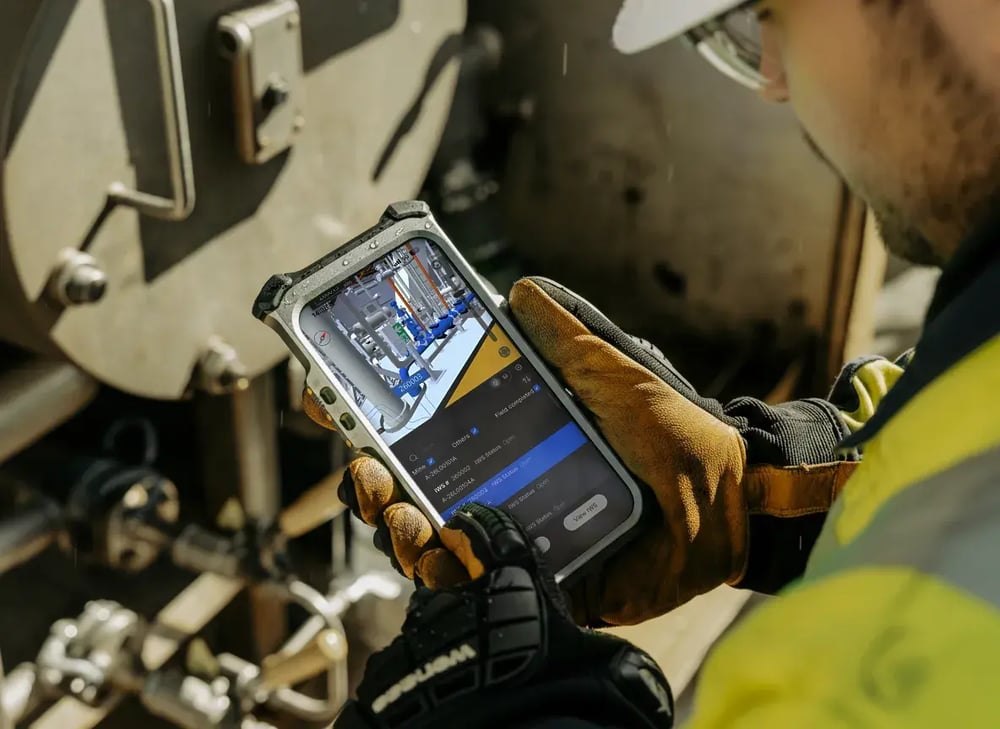
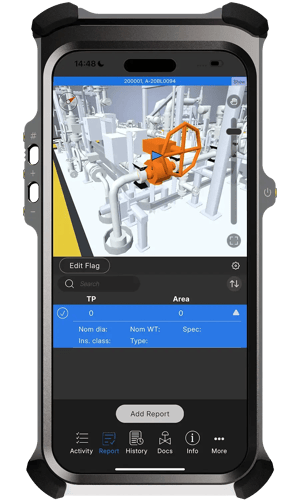
Visco's vCOG MetaTwin is a connected visualization platform built for industrial fieldwork. It integrates engineering data, live sensor readings, maintenance history, 3D scans, and documentation into a single interface that feels more like a game than a back-office system. Technicians can virtually walk an asset before physically arriving, with full spatial and operational context already loaded. When they get to the worksite, they are not discovering, they are confirming.
2. Xshielder Zone 1-Certified iPhone 16 Pro Max Enclosures
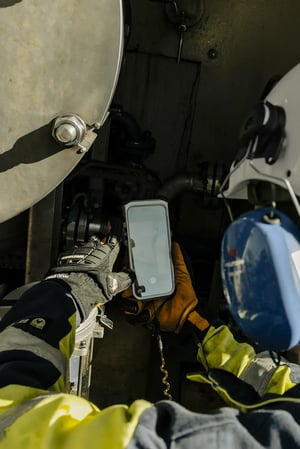
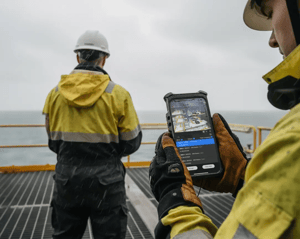
To run demanding software safely in explosive atmospheres, the customers chose Xshielder's explosion-proof iPhone 16 Pro Max. This gave field teams full Apple-grade processing performance, the familiar iOS interface, and seamless integration with corporate IT and software distribution.
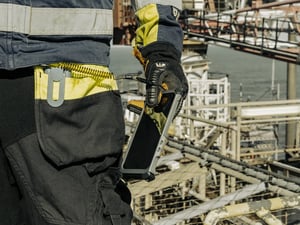
The Xshielder device was light, pocketable, and built for single-handed use. People wanted to pick them up. That matters more than most technology deployments acknowledge.
How They Work Together
The combination unlocked what neither could achieve separately. Workers could now pull up Visco's 3D models in seconds, standing directly in front of the equipment they were inspecting. Live operational data overlaid onto the physical asset, and findings were captured directly into the 3D model. No transcription, no delays, and no return trips back to the office.
Results and Impact
The shift to a fully digital, mobile workflow delivered immediate and measurable improvements. The operator tracked specific KPIs across their operations from day one.
“The synergy is where the magic happens. Visco gives us the visual context we were missing, and Xshielder allows us to hold that context in the palm of our hand.”
Senior Operations Lead, Major Energy Operator

Additional Impact
Improved Uptime
Beyond the headline efficiency numbers, the operator recorded a 2% increase in overall uptime. Faster insights meant quicker reactions and fewer delays cascading through operations.
Safety and compliance
Safety improved as well. Less time spent in hazardous zones, better situational awareness at the point of work, and a reduced risk of acting on outdated information all contributed to a lower risk profile across the asset. In an environment where the cost of an incident is measured in human terms first, this matters.
Time savings
By removing unnecessary trips back and forth to the office for permits, drawings, and prints, field time for some tasks was reduced by more than 90%.

Conclusion
-Photoroom.png?width=300&name=image%20(1)-Photoroom.png)
This deployment proved that software and hardware cannot be optimized in isolation. Each was capable independently but together, they removed a barrier that had frustrated fieldworkers and digital transformation programs for years.
Visco built the connected picture: cleaned data, accurate 3D models, and a platform that made complex information accessible. Xshielder delivered the device that could actually carry that picture into a Zone 1 environment, in a way that people wanted to use from day one.
The result was not a digitized version of the old paper workflow. It was a fundamentally different way of working offshore: guided, contextual, real-time, and human-centered.
Want to see which measurable KPIs this combination can unlock for your operations?
Book a joint demo of Visco vCOG running on Xshielder devices using the form below.