
Intrinsically Safe vs Explosion Proof Phones: What's the Difference & Why It Matters
When it comes to mobile devices in hazardous environments, "intrinsically safe" and "explosion proof" often get used as if they mean the same thing. They don't. Each describes a different approach to protection, and choosing the wrong one for your site can be both a procurement headache, and worse, a safety violation.
This guide breaks down both classifications in plain language, explains where each applies, and gives you a practical framework for making the right call on which to opt for.
Understanding Hazardous Zones & Their Classifications
Before you can choose between intrinsically safe and explosion proof, you need to understand the environment you're protecting against. The type of hazardous zone your site falls into is the single most important factor in determining which protection approach is appropriate, and what certification any device must carry.
Refineries, offshore platforms, chemical plants, and other hazardous sites contain atmospheres where flammable gases, vapours, or dusts may be present. In these environments, even a small electrical spark or surface heat from a standard device can trigger an ignition. Frameworks like ATEX (Europe) and IECEx (global) serve to define these zones and set certification standards before equipment can legally operate in them.
Zone 0, 1, and 2 (Division 1 and 2 in North America) describe how often an explosive atmosphere is present. IS and Ex-proof aren't interchangeable across all classifications, which is exactly why getting the zone right comes before everything else.
|
ATEX Zone |
What it Means |
|
Zone 0 |
An area where an explosive gas atmosphere is present continuously or for long periods. |
|
Zone 1 |
An area where an explosive gas atmosphere is likely to occur occasionally during normal operation. |
|
Zone 2 |
An area where an explosive gas atmosphere is not likely to occur in normal operation, and if it does, it will only exist for a short time. |
.webp?width=1200&height=800&name=Ex%20Zone%20(2).webp)
What Is an Intrinsically Safe (IS) Phone?
Intrinsically safe devices are engineered from the ground up to prevent ignition. The core principle is energy limitation: the circuits inside the device are designed so that the energy levels available, even in a fault condition, are too low to ignite a surrounding explosive atmosphere.
IS phones are typically designed for hazardous areas, such as Zone 1 and 2. However, where suitably certified, they can also be used in Zone 0. This is an important distinction from Ex-Proof devices, which can never be used in Zone 0. In North American terms, IS devices are commonly used in Division 1 locations.
In practice, intrinsically safe devices tend to be lighter and slimmer than their explosion proof counterparts, which makes them appealing for workers who need to carry equipment throughout a shift. The trade-off is that IS certification places constraints on the hardware inside. Processing power, camera capability, and battery capacity can all be limited by the energy thresholds that the certification demands. Repairability can also be restricted, since any modification may affect the certified state of the device.
What Is an Explosion Proof (Ex-Proof) Phone?
Explosion proof takes a different approach. Rather than preventing ignition inside the device, Ex-proof equipment is built to contain any internal ignition so it can't propagate to the surrounding atmosphere.
That means robust enclosures, sealed ports, strengthened housings, and construction that can withstand the pressure of an internal explosion without fracturing or releasing hot gases. The device doesn't stop a spark from happening, rather it stops the spark from spreading.
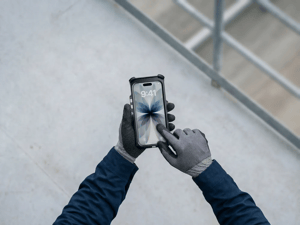
Because the protection comes from the enclosure rather than the circuitry, Ex-proof solutions can accommodate standard or high-performance hardware inside the casing. Workers can use familiar devices, such as iPhones, with full processing capability, camera access, and software ecosystems intact.
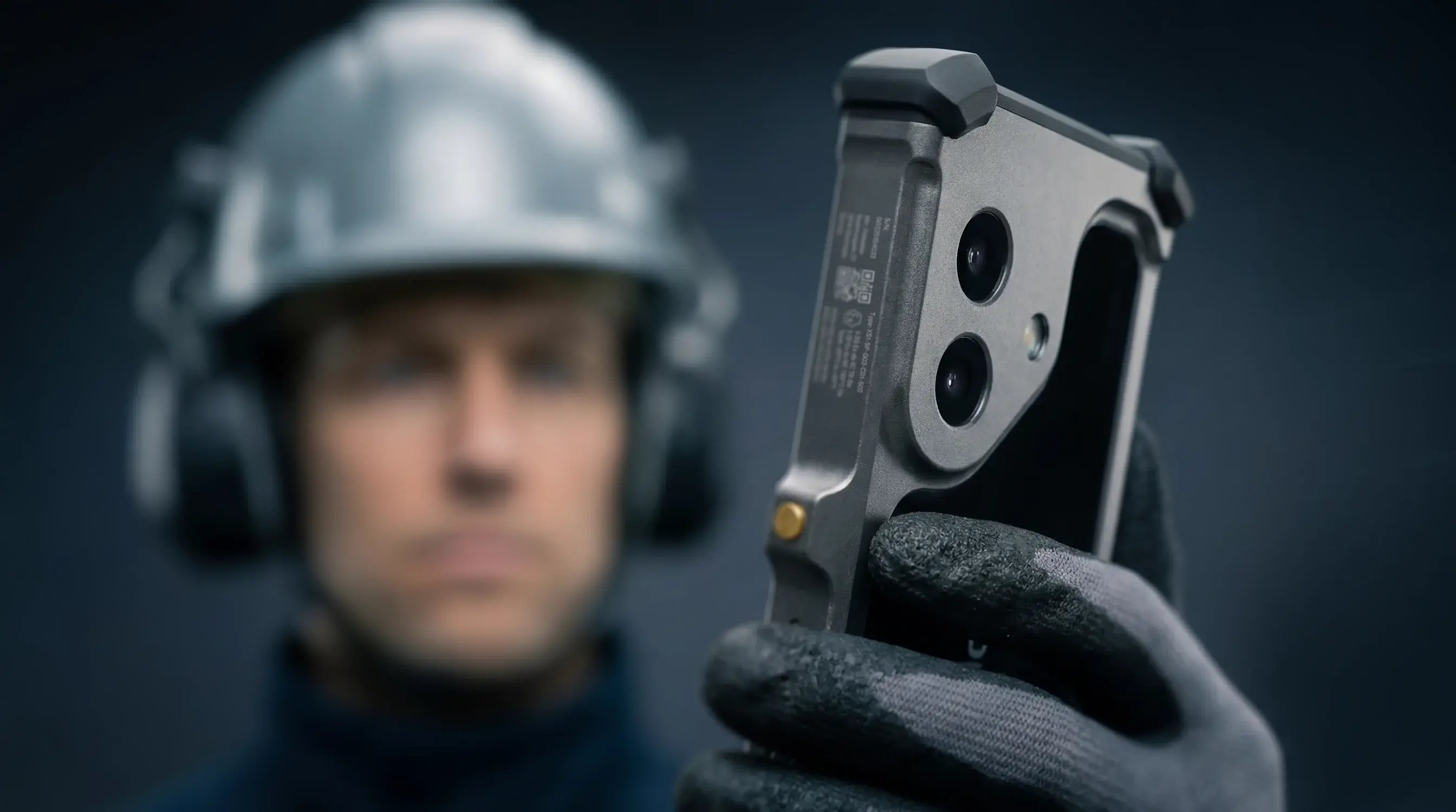
This is where solutions like Xshielder's Ex-proof cases come in. Rather than replacing hardware with a purpose-built certified device, an Ex-proof case brings the protection to your existing smartphone. That reduces cost, simplifies device management, and keeps your teams on hardware they already know.
Ex-proof phones and cases are widely specified for Zone 1 and Zone 2 environments, as well as Division 1 and Division 2 locations.
Intrinsically Safe vs Ex-Proof: Key Differences at a Glance
|
Feature |
Intrinsically Safe (IS) |
Explosion Proof (Ex-Proof) |
|
Design philosophy |
Limits electrical energy to prevent ignition |
Contains internal ignition to prevent propagation |
|
Zone suitability |
Zone 0, 1, 2 / Div 1, 2 |
Zone 1, 2 / Div 1, 2 |
|
Hardware flexibility |
Limited — circuitry must meet energy thresholds |
High — full-spec hardware can be used inside certified enclosure |
|
Form factor |
Generally lighter and slimmer |
Can be bulkir due to robust enclosure construction |
|
Repairability |
Restricted — modifications may invalidate certification |
More accessible, especially with modular case-based solutions |
|
Certification pathways |
ATEX (Ex ia/ib), IECEx, UL/CSA |
ATEX (Ex d), IECEx, UL/CSA |
|
Cost considerations |
Higher unit cost for dedicated certified hardware |
Typically lower total lifetime cost with ex-proof case solutions for existing devices |
|
Best suited for |
When Zone 0 use is required |
Regular hazardous area use where hardware performance matters |
Common Misconceptions
"If it's certified, any certified device will do."
Certification alone isn't enough. A device certified for Zone 2 shouldn't be used in Zone 1. Always match the certification level to your site's zone classification — and confirm the gas group and temperature class align with the specific substances present.
"Explosion proof means the device can't explode."
It means the device won't cause an explosion. If ignition occurs internally, the enclosure contains it. It's a containment strategy, not immunity.
"IS is always the safer option."
It depends on your zone, the gas group, and the specific energy thresholds involved. IS is essential in Zone 0, but in Zone 1 or 2, a well-specified Ex-proof solution may offer equivalent safety with more operational flexibility.
"A rugged consumer phone is good enough."
Rugged and certified are not the same thing. A phone that survives drops or water has not been assessed for explosive atmospheres. Without the right certification, no device — however tough — should be used in a hazardous area.
How to Choose the Right Device for Your Site
Start with the non-negotiables. Your site's hazardous area documentation defines your zone classification — that's the baseline everything else builds from. Once you have that, confirm that the gas group and temperature class of any device match the specific substances present on your site. For example, a device certified for Group IIA (propane) doesn't automatically cover Group IIC (hydrogen) environments.
To check whether a device matches your site, read our guide on how to decode ATEX markings.
With those locked in, think about how your team actually works day-to-day:
- What do they need the device to do? Camera access, specific software, connectivity to plant systems — these affect whether a dedicated IS device or an Ex-proof case is the more practical fit.
- How are devices managed across the fleet? Ex-proof case solutions running on standard smartphones simplify MDM and cut support overhead, especially at scale.
- What does replacement and repair actually cost? Factor in replacement cycles, software licensing, and training alongside the purchase price. The upfront cost is rarely the whole picture.
For many operations, particularly those running Zone 1 or Zone 2 sites where workers need capable, familiar hardware, Ex-proof case solutions offer a best-of-both worlds scenario. You get certified protection without sacrificing performance, and without the cost of replacing an entire device fleet with purpose-built hardware.
Summary
The choice between an intrinsically safe and an explosion proof phone isn't about which option sounds safer. It's about matching the right protection strategy to your specific environment.
IS devices limit the energy available to cause ignition and are essential where explosive atmospheres are a constant presence. Ex-proof solutions contain any ignition that occurs, and offer greater hardware flexibility in Zone 1 and Zone 2 environments.
Before you specify either, start with your zone classification and work outward from there.
Or, get in touch to discuss your site requirements.