
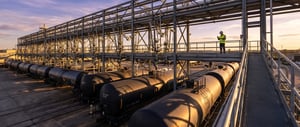
Class I Div 1 vs Div 2: what changes for phones, tablets and cameras
When a crew needs a phone or tablet for a hazardous area in North America, the first question is which Division they will be working in. Class I, Division 1 and Division 2 differ in how often flammable gas is expected, and that determines which protection methods are permitted and how many devices are available.
This guide compares the two, maps them to ATEX Zones 0, 1 and 2, and covers what each means for phones, tablets and cameras.
Class I Div 1 vs Div 2 at a glance
| Class I, Division 1 | Class I, Division 2 | |
|---|---|---|
| When flammable gas is present | Ignitable concentrations can exist during normal operation, including routine maintenance and regular leakage | Gas is normally contained and reaches ignitable levels only under abnormal conditions, such as a failed seal or ventilation breakdown, usually for a short time |
| NEC basis | NEC 500.5(B)(1), with equipment rules in Article 501 | NEC 500.5(B)(2), with equipment rules in Article 501 |
| Nearest zone equivalent | Zone 0 and Zone 1 | Zone 2 |
| ATEX category and EPL (for reference) | Category 1G or 2G, EPL Ga or Gb | Category 3G, EPL Gc |
| Typical protection methods | Explosionproof, intrinsic safety, purged and pressurized | Nonincendive, hermetically sealed, oil immersion, plus any Division 1 method |
| Use in the other Division | Can be used in Division 2 for the same gas group with a suitable temperature class | Cannot be used in Division 1 |
| Phones | A short list of mostly intrinsically safe models, with limited battery capacity and older hardware | A much wider choice, including rugged phones with nonincendive ratings |
| Tablets | Very few models, with battery size and heat as the main constraints | More models, though temperature class still needs checking |
| Cameras | Flash and torch may be restricted, and inspection photography increasingly happens on certified phones | Fewer restrictions and more modern camera hardware |
The core difference: how often gas is present
In Division 1, ignitable concentrations of gas or vapor can exist under normal operating conditions. That includes gas released during routine maintenance, through regular leakage, or around open processes such as transfer points, vents and spray booths.
In Division 2, flammable materials are present but normally kept within closed containers, piping or systems. Gas reaches ignitable levels only under abnormal conditions, such as a ruptured gasket or a ventilation failure, and then usually briefly. Areas next to a Division 1 location are often classified as Division 2 as well.
Because Division 1 is the more demanding environment, equipment suitable for Division 1 can be used in Division 2, provided it is approved for the same gas group (A, B, C or D) and has a suitable temperature class. The reverse does not apply, because Division 2 equipment is assessed for an atmosphere that is normally absent.
How Divisions map to ATEX Zones 0, 1 and 2
Most of the world, and a growing number of North American sites, classify hazardous areas using Zones, which split the gas hazard into three levels. Zone 0 and Zone 1 together roughly equal Division 1, and Zone 2 roughly equals Division 2. Our comparison of Zone 1 vs Zone 2 covers the zone definitions in more detail.
| Zone | When gas is present | Nearest Division | ATEX category | EPL |
|---|---|---|---|---|
| Zone 0 | Continuously or for long periods | Division 1 | 1G | Ga |
| Zone 1 | Likely to occur occasionally in normal operation | Division 1 | 2G | Gb |
| Zone 2 | Not likely in normal operation, and only briefly if it occurs | Division 2 | 3G | Gc |
The match is approximate, and moving equipment between the systems follows specific rules in NEC Articles 501 and 505. Equipment listed for Division 1 can be used in Zone 1 or Zone 2, and Division 2 equipment can be used in Zone 2. Going the other way is stricter. Zone 0, Zone 1 and Zone 2 equipment can all be used in Division 2 for the same gas and a suitable temperature class, but only Zone 0 equipment is accepted in Division 1. A Zone 1 device is therefore not automatically suitable for Division 1 - only if it also carries a Division 1 listing, or the site reclassifies the area under the Zone system.
ATEX and IECEx certificates are widely recognized elsewhere, but US installations generally require equipment listed by a Nationally Recognized Testing Laboratory and marked to NEC requirements. Our guide to Class I Division 2 for mobile devices covers the NEC 501.5 rules for using zone-certified equipment in a Division 2 area.
Is Class 1 Div 2 explosion proof or intrinsically safe?
Neither term describes Division 2 itself. Division 2 is an area classification, while explosion-proof and intrinsically safe describe protection methods, and Division 2 permits several of them.
Explosionproof in the NEC
In the NEC, explosionproof is a specific, defined protection method. The enclosure must withstand an internal explosion of a specified gas, stop flame or hot gases escaping through its joints from igniting the surrounding atmosphere, and run at a safe external temperature. It is a certified method with its own test requirements, even though marketing often uses the word loosely.
Division 2 usually relies on lighter methods, such as nonincendive circuits and equipment, hermetically sealed or oil-immersed contacts, and equipment with no arcing parts. Explosionproof equipment is acceptable in Division 2 but not required.
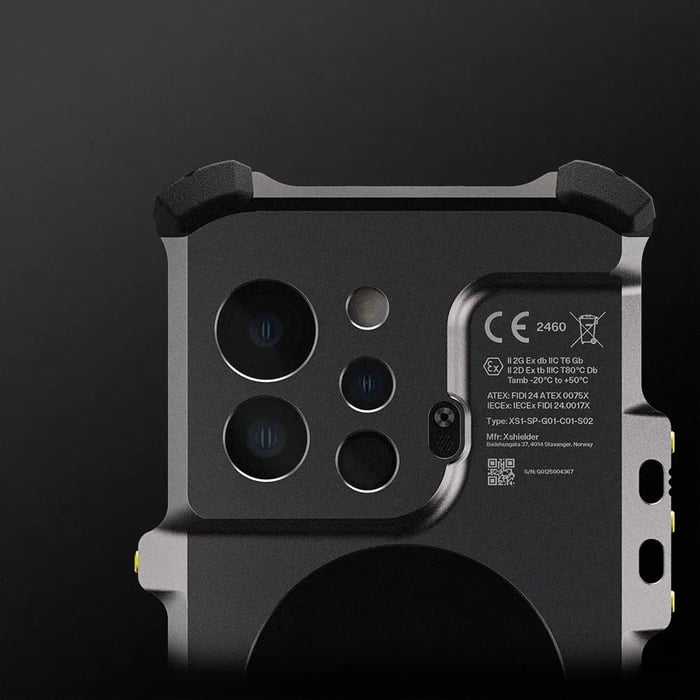
The Zone system has a counterpart called flameproof, marked "Ex d", which works on the same principle but is tested to IEC-based standards under Article 505. The two terms are not interchangeable on a marking. For any explosion-proof product, including covers for iPhone and iPad, the marking on the label and certificate establishes whether it is explosionproof under the Division system, flameproof under the Zone system, or both.
Intrinsic safety in Division 2
Intrinsic safety takes the opposite approach. An intrinsically safe device limits the electrical and thermal energy in its circuits so that it cannot ignite the atmosphere, even when specified faults occur. It is permitted in both Division 1 and Division 2, with intrinsically safe systems covered by NEC Article 504.
Intrinsically safe equipment is also acceptable in Division 2 but not required. Division 2 has its own energy-limiting method, nonincendive, which is assessed under normal operation only, while intrinsic safety must also hold up under fault conditions. Our guide to non-incendive vs intrinsically safe protection covers that difference, and our explainer on Ex ic, Ex ec and Ex nA covers the closest Zone system equivalents.
For handheld devices, intrinsic safety is the dominant route. Most purpose-built Division 1 phones and tablets are intrinsically safe, which is why the term is widely used for the whole category.
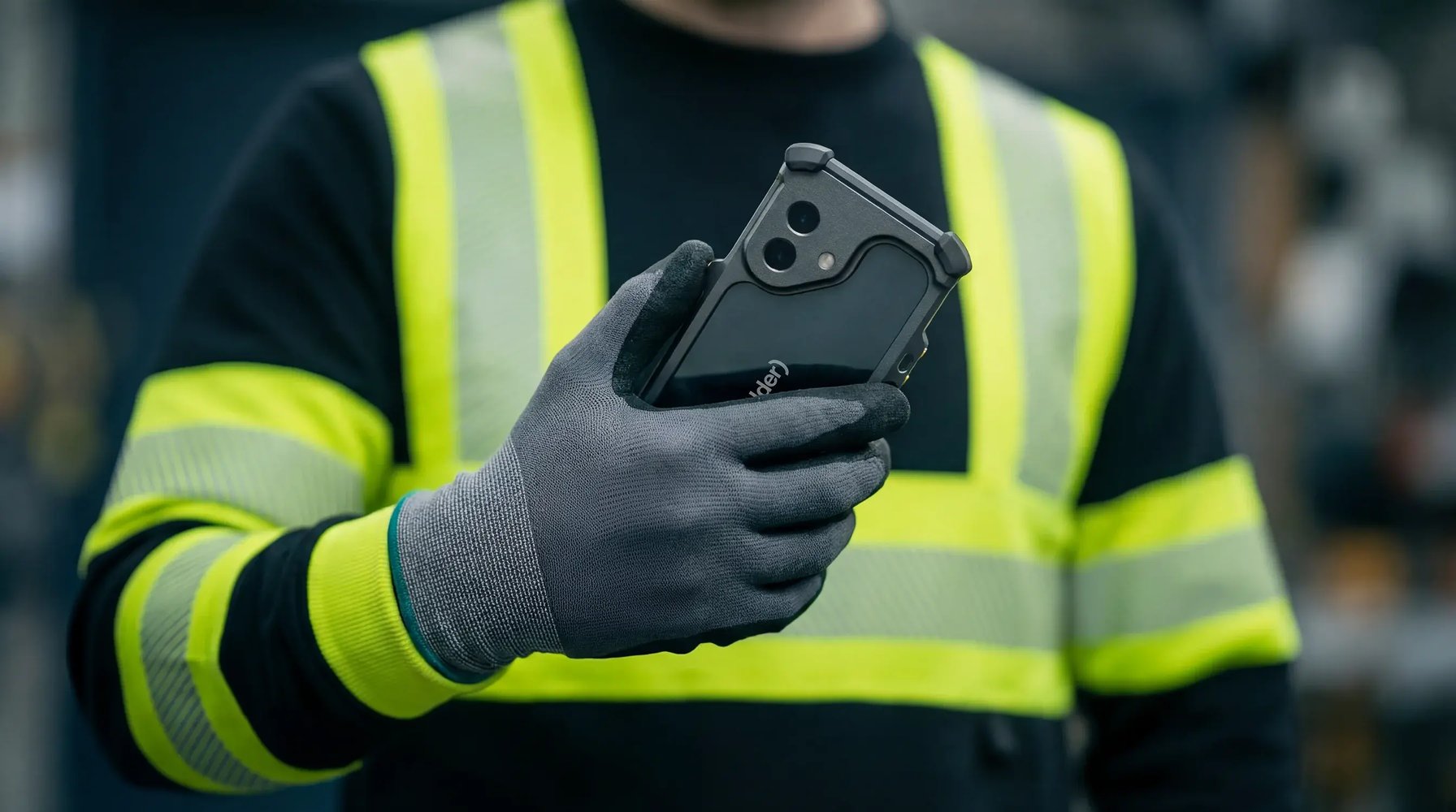
What changes for phones
The battery is the biggest constraint. A damaged or shorted lithium-ion cell can release its stored energy as heat or sparks, so intrinsically safe phones for Division 1 typically use smaller, encapsulated batteries with protective circuitry. That often means shorter runtime than a comparable consumer phone, with charging usually restricted to non-hazardous areas.
Radios add another energy source. Cellular, Wi-Fi, Bluetooth and NFC all transmit radio frequency power, and certified devices are assessed with those radios active, which can mean restricted features or bands.
The result is a short list of Division 1 options, typically Android phones on hardware a generation or more behind current flagships. Division 2 is far broader, because nonincendive certification is less demanding and more rugged commercial phones carry a Division 2 rating.
A third route is a certified explosion-proof cover around a current consumer phone. Xshielder's cover for the iPhone 17 Pro Max carries ATEX and IECEx Zone 1 certification, which also covers Zone 2, giving teams the latest iPhone camera system, processor and display without waiting for a purpose-built equivalent. These are ATEX and IECEx certificates without an AEx marking, and NEC 501.5 only accepts zone equipment in Division 1 when it is listed for Zone 0, so on a US site the cover is a Division 2 option, subject to your AHJ's acceptance.
What changes for tablets
Tablets face the same constraints at a larger scale. A bigger battery stores more energy, and a larger screen and more powerful processor generate more heat, which makes thermal performance the main hurdle.
Every certified device carries a temperature class, from T1 (450°C) to T6 (85°C), which sets the maximum surface temperature it can reach. That figure has to stay below the autoignition temperature of the gases present. Running the camera, GPS and screen at full brightness in direct sun pushes surface temperature up, and certification has to account for that worst case.
Division 1 tablets are scarce and often heavier and slower than consumer models, as our guide to intrinsically safe tablets and iPads sets out. Division 2 offers more choice, though temperature class and gas group still need checking. For teams working from drawings, P&IDs and digital permits, screen size and processing power matter. Xshielder's explosion-proof cover for the iPad Pro 11" brings a large, bright display, LiDAR and Apple's M-series performance into Zone 1 and Zone 2 areas.
What changes for cameras
The flash and torch are the main camera-specific concerns. An LED flash concentrates light and heat into a small area, and optical radiation is one of the ignition sources hazardous-area standards consider. Depending on the certificate, the flash or torch may be limited or disabled, so check the conditions of use before relying on it for low-light work.
The bigger change is where inspection photos come from. Dedicated Ex-certified cameras were once the standard tool, but much of that work now happens on phones, because the image goes straight into the inspection app or maintenance system with a timestamp, location and work order attached.
Camera quality affects how useful those images are. The iPhone 17 Pro Max has three 48MP rear cameras, including a 4x telephoto that lets inspectors capture nameplates, gauges and corrosion on pipe racks from the walkway or ground level. Its LiDAR scanner adds depth data for measurements, 3D scans and faster focusing in low light. We put it through its paces in our LiDAR accuracy test.
Crews who cross both Divisions
Many facilities have both Divisions close together, so the right strategy depends on where each crew works.
Division 1 equipment covers both Divisions
For crews who move between Divisions during a shift, Division 1 equipment is the simpler choice. One device covers both, provided the gas group and temperature class suit the site, so nobody has to swap devices at a boundary. The trade-off is a smaller selection and, typically, a higher price.
Division 2-only equipment for crews who stay in Division 2
Some crews never enter Division 1. For example, teams working around sealed storage, ventilated compressor buildings or the outer areas of process units may spend their whole shift in Division 2. These teams gain wider choice and lower cost from Division 2 equipment, as long as clear site boundaries, labeling and training keep those devices out of Division 1.
If your inspections depend on a strong camera, LiDAR or a large screen, Xshielder's explosion-proof covers bring current iPhone and iPad hardware into Zone 1 and Zone 2 areas. Browse the full range, or get in touch to talk through which cover fits your site's classification.
FAQs
What is the difference between Class 1 Div 1 and Class 1 Div 2?
Class 1 Div 1 covers locations where flammable gas or vapor can reach ignitable concentrations during normal operation. Class 1 Div 2 covers locations where gas is normally contained and only reaches ignitable levels under abnormal conditions, such as a leak or ventilation failure.
C1D1 vs C1D2: can C1D1 equipment be used in a C1D2 area?
Yes. Equipment approved for Class 1 Div 1 can be used in Class 1 Div 2, provided it is approved for the same gas group and has a suitable temperature class.
Is Class 1 Div 2 explosion proof?
Class 1 Div 2 is an area classification, so the term does not apply to the area itself. Explosionproof equipment is permitted in Div 2, but Div 2 equipment usually relies on nonincendive or other energy-limiting methods instead.
Do you need intrinsically safe equipment in Class 1 Div 2?
No. Intrinsically safe equipment is permitted in Class 1 Div 2, but the Division also accepts nonincendive, hermetically sealed and explosionproof equipment, so intrinsic safety is one of several options.
Is Class 1 Div 1 the same as Zone 1?
Not exactly. Class 1 Div 1 covers both Zone 0 and Zone 1 conditions, and under the NEC, Zone-marked equipment must be rated for Zone 0 to be used in a Div 1 area.
Can a Class 1 Div 2 phone be taken into a Div 1 area?
No. A Class 1 Div 2 phone is assessed only for atmospheres where gas is normally absent, so it must stay out of Div 1 areas where gas is expected during normal operation.