

Zone 2 Phones, Cases and Tablets: Your Options in 2026
You can use three kinds of phone or tablet in a Zone 2 hazardous area. The first is a device certified specifically for Zone 2. The second is any device certified above Zone 2, including an iPhone or iPad in a Zone 1 certified explosion-proof case (provided its gas group and temperature class also suit the site). The third, on some sites, is an ordinary device used under a permit for a specific task. Outside those three routes, a standard phone or tablet stays out of the zone, however rugged it is.
Zone 2 covers areas where an explosive gas atmosphere is not expected in normal operation and lasts only a short time if it does occur. Most people searching for intrinsically safe phones, cases or tablets for Zone 2 already know their area is classified. What they need to settle is which device to buy, which marking to check and whether Zone 1 equipment is worth the extra cost. If you are still weighing the two zones against each other, start with our comparison of Zone 1 vs Zone 2 for phones and tablets.
What counts as a Zone 2 device
Equipment for Zone 2 needs at least ATEX Category 3G, which corresponds to equipment protection level (EPL) Gc under IECEx. For handheld electronics, the protection concept is most often Ex ic, which is intrinsic safety at the Zone 2 level. The circuits are designed so that a spark or hot surface in normal operation lacks the energy to ignite the surrounding gas. Increased safety (Ex ec) also appears on Zone 2 equipment, though it is more common on fixed installations. Our guide to Zone 2 protection types (Ex ec and Ex ic) explains each concept and how to read a full marking.
Equipment certified for Zone 1 (Category 2G, EPL Gb) or Zone 0 (Category 1G, EPL Ga) can also be used in Zone 2, because it is assessed against more demanding conditions. Its gas group and temperature class still have to match the substances on your site. A device marked IIA can't be used where IIB or IIC gases are present, for example, whichever zone it is certified for. For zones, gas groups and temperature classes in full, see our guide to ATEX and IECEx zone classifications.
Division 2 sites in North America
Class I Division 2 describes a similar level of risk to Zone 2, but the two are approved under different schemes. An ATEX or IECEx marking alone doesn't make a phone, tablet or phone case acceptable at a US Division 2 site, where the authority having jurisdiction (AHJ) has the final say. Xshielder's cases carry ATEX certification, and the iPhone cases IECEx as well, but no US AEx marking, so AHJ acceptance is the deciding step. North American sites also use non-incendive equipment, which is close to Ex ic but certified under different rules, as we explain in non-incendive vs intrinsically safe. For the US route in detail, see our pages on Class I Division 2 requirements and Division 1 vs Division 2 equipment.
Five checks before you buy
In Europe, Category 3 electrical equipment can be placed on the market under the manufacturer's own conformity assessment, without a notified body examination. A Zone 2 device therefore often comes with a declaration of conformity in place of a third-party certificate, which puts more weight on your own checks:
- The Ex marking is on the device itself, as well as in the paperwork.
- The declaration of conformity or IECEx certificate names the exact model and variant you are buying. IECEx certificates can be looked up on the IECEx online certificate system.
- The gas group and temperature class cover every substance on the site.
- The conditions of use fit how your crews work, such as whether the battery can be charged or the device opened inside the zone.
- Every accessory used with the device, from headsets to speaker microphones, carries its own certification.
Phones for Zone 2
Phones for Zone 2 fall into two groups. Some handsets are certified for Zone 2 only, and anything certified for Zone 1 covers Zone 2 as well.
Dedicated Zone 2 phones
Most phones certified only for Zone 2 are rugged Android handsets rated Ex ic, and some are versions of the maker's Zone 1 model. With a lower protection level to meet, they tend to be lighter and cheaper than Zone 1 equivalents, and closer in size to an ordinary rugged phone.
The trade-offs come from the same certification. A Zone 2 phone has to stay out of Zone 1, so it suits crews whose work never takes them there. Hardware is usually mid-range and refreshed less often than consumer phones, so the camera, processor and software support can lag behind the phones your teams use elsewhere. Check how long the maker will supply security updates as well as the price, since a phone that loses support partway through a deployment has to be replaced early.
Zone 1 phones and iPhone cases
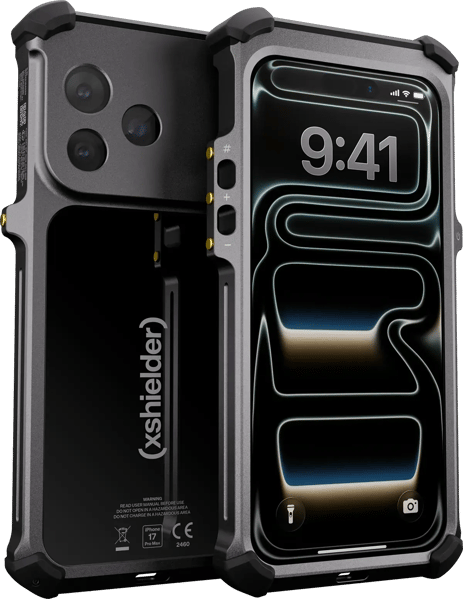
Any phone certified for Zone 1 can also be used in Zone 2, provided its gas group and temperature class suit the site. That includes dedicated intrinsically safe phones, and current iPhones in a Zone 1 certified explosion-proof case such as Xshielder's iPhone 17 Pro Max ATEX case, iPhone 17 ATEX case and iPhone 16 Pro Max ATEX case.
Many teams with mostly Zone 2 sites buy Zone 1 equipment anyway. Routes often cross between zones, and one device per person is easier to manage than two fleets with rules about where each may go. A cased iPhone also gives crews hardware they already know. The iPhone 17 Pro Max keeps its 48MP Pro camera system, up to 8x optical-quality zoom, LiDAR scanner and A19 Pro chip, which helps technicians read nameplates and gauges from a distance and take measurements with LiDAR apps. Our guide to iPhone options for Zone 1 and Zone 2 compares the models, and our Zone 1 vs Zone 2 comparison sets out when each type of device makes sense.
Tablets for Zone 2
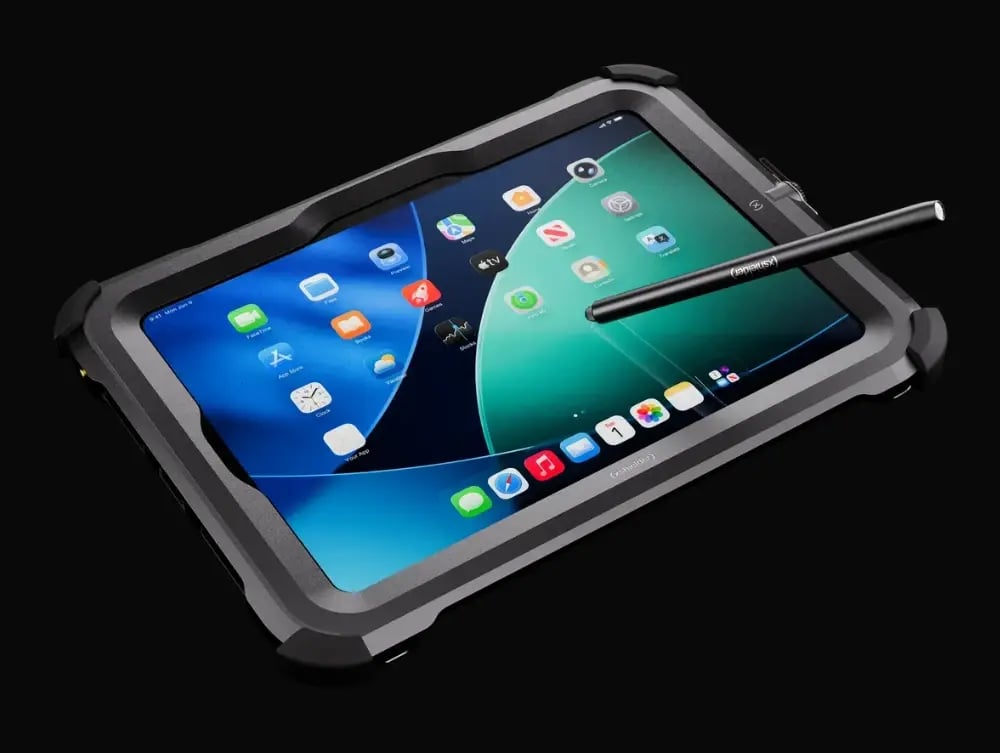
Tablets follow the same pattern. Dedicated Zone 2 tablets are mostly Android devices rated Ex ic, with the same trade-offs as Zone 2 phones on hardware and update cycles. The alternative is a tablet certified for Zone 1, either a dedicated intrinsically safe tablet or an iPad Pro in a Zone 1 certified explosion-proof case, and either one covers Zone 2 as well.
For teams that want an iPad in Zone 2, a certified case is the route. Xshielder's explosion-proof iPad Pro case is certified for Zone 1 under ATEX and brings the 11-inch Tandem OLED display, LiDAR and Apple's M-series performance into Zone 1 and Zone 2 areas, which suits work with drawings, P&IDs and live data. Our guide to intrinsically safe tablet options compares dedicated tablets with the iPad on weight, certification, display and cost.
Radios, headsets and other kit
Certification applies to each item a person carries into the zone, and a phone's certificate covers that phone alone. Bluetooth headsets, remote speaker microphones, cameras, flashlights and wearables each need their own Zone 2 or Zone 1 marking. Consumer smartwatches, fitness trackers and earbuds carry no hazardous area certification, so they stay outside with the rest of a worker's personal electronics.
Two-way radios work the same way, and a radio certified for Zone 1 covers Zone 2. For push-to-talk on phones or radios, the audio accessories have to match the zone too, and our post on certified headsets for push-to-talk covers the options. For inspection photography, see our guide to intrinsically safe cameras.
Three routes compared
The table sets the three routes side by side. Each assumes the device's gas group and temperature class suit the site.
| Dedicated Zone 2 device | Zone 1 device or case | Ordinary device under a permit | |
|---|---|---|---|
| What you carry | Rugged phone or tablet certified for Zone 2 | Dedicated intrinsically safe phone or tablet, or an iPhone or iPad in a Zone 1 certified explosion-proof case | Standard phone or tablet |
| Marking to look for | II 3G, EPL Gc, usually Ex ic | II 2G, EPL Gb, such as Ex ib or Ex db | None |
| Usable in Zone 1 | No | Yes | No |
| Relative cost | Lower than Zone 1 equivalents | Higher per unit | Device cost plus permits, gas monitoring and supervision |
| Best for | Crews who stay in Zone 2 | Routes that cross zones, one device per person, current hardware | Occasional, planned tasks the site authorizes |
What Zone 2 devices cost
Dedicated intrinsically safe phones for Zone 1 typically list at around €1,900 to €2,700 per unit, and dedicated Zone 1 tablets at roughly €3,000 to €4,000. Zone 2 models generally sit below those ranges, since Category 3 conformity assessment is less demanding than Category 2. Prices vary widely by maker, configuration and order volume, so ask suppliers to quote the exact model with its accessories.
An iPhone or iPad in a Zone 1 case is priced in two parts, the case and the Apple device, which many organizations already buy and manage through their existing mobile device management. Whichever route you take, the purchase price is only part of the comparison. Moving a fleet from Zone 2 to Zone 1 later usually means a second set of devices, new accessories and retraining, which we cover in choosing between Zone 1 and Zone 2 devices. Support life matters as well, and our breakdown of phone costs and support life sets out the full cost of ownership.
Can you use a normal phone in Zone 2?
Only when the site authorizes it for a specific task under its own risk assessment. In the EU, that decision sits within the employer's duties under the ATEX Workplace Directive (1999/92/EC), and in Great Britain under DSEAR. Some operators allow an ordinary phone or tablet in Zone 2 for a planned job, and others never allow it.
Where a site does allow it, the controls typically include a hot work or gas-free permit, continuous gas monitoring while the device is in use, leaving the area as soon as a detector alarms, and no charging inside the zone. The permit covers one task, one location and one period, and work stops if gas readings change.
That makes the permit route workable for occasional jobs, such as a contractor photographing equipment during a shutdown. It is hard to scale to daily use by a whole crew, because every use needs a permit, a gas test and someone to manage both. Workers also have to withdraw the device when gas is detected, which is when they most need to communicate. Rugged phones fall under the same rules as any other uncertified device, as our post on why a rugged phone isn't enough explains. For how US sites handle unrated devices, see our Class I Division 2 guide.
Zone 22: devices for dust areas
Zone 22 is the dust counterpart of Zone 2, covering areas where a combustible dust cloud is not expected in normal operation and is short-lived if it forms. Equipment needs ATEX Category 3D or EPL Dc, and equipment certified for Zone 21 or Zone 20 covers Zone 22 as well.
Dust adds two checks to the gas ones. The dust group (IIIA for combustible flyings, IIIB for non-conductive dust, IIIC for conductive dust) has to match the material on site, and the maximum surface temperature has to sit below the ignition temperature of both a dust cloud and a dust layer, with the margins your installation standards require. The dust group also affects the ingress protection the enclosure needs. Sites with both gas and dust hazards often standardize on devices certified for both, so check the marking for a "D" line as well as a "G" line.
Xshielder's iPhone and iPad cases are certified for Zone 21 as well as Zone 1, so they also cover Zone 22. [CHECK BEFORE PUBLISHING: confirm the dust marking, dust group and surface temperature on each case's certificate, including the iPad case.]
If your crews work in Zone 2, or move between Zone 2 and Zone 1, Xshielder's explosion-proof cases give them one current iPhone or iPad for both. Explore the iPhone 17 Pro Max, iPhone 17 and iPhone 16 Pro Max cases or the iPad Pro 11-inch case. Tell us which zones and gases your sites have, and get a quote for the right setup.
Frequently asked questions
What phones can be used in a Zone 2 hazardous area?
Phones certified for Zone 2 (ATEX Category 3G or EPL Gc, usually Ex ic) and phones certified for Zone 1 or Zone 0 can be used in Zone 2, provided their gas group and temperature class suit the site. That includes current iPhones in a Zone 1 certified explosion-proof case.
Can you use a mobile phone in Zone 2 with a hot work permit?
Some sites allow an uncertified phone in Zone 2 for a specific task under a hot work or gas-free permit, usually with continuous gas monitoring and no charging in the zone. The decision rests with the site under its own risk assessment, and some sites don't allow it at all.
Can an iPad be used in a Zone 2 area?
An iPad Pro in a Zone 1 certified explosion-proof case can be used in Zone 2 as well as Zone 1, provided the gas group and temperature class suit the site. A standard iPad carries no hazardous area certification.
How can I check a Zone 2 phone is genuinely certified?
Check the Ex marking on the device and confirm that the declaration of conformity or IECEx certificate names the exact model. IECEx certificates can be looked up on the IECEx online certificate system.
Do Bluetooth headsets need ATEX certification for Zone 2?
Yes. Every headset, speaker microphone or other accessory carried into Zone 2 needs its own hazardous area certification, whichever certified phone it pairs with.
Are Zone 2 phones cheaper than Zone 1 phones?
Zone 2 phones usually cost less than Zone 1 equivalents, because Category 3 equipment faces a lighter conformity assessment. The saving only applies to crews who stay in Zone 2, since anyone whose route crosses into Zone 1 needs Zone 1 equipment.